SDS Drill Guide: What they are, how they work & when to use them
If you spend any time on site or in a workshop, you’ll eventually hit the same problem: standard drills just don’t cut it when you’re working with concrete, brick, blockwork, or stone.
That’s exactly the gap SDS drills were designed to solve.
Over time, they’ve become one of the most relied-upon tools in construction, electrical installation, plumbing, and renovation work.
This guide breaks down what an SDS drill actually is, why it behaves differently on hard materials, when it becomes essential rather than optional, and how it compares to other drills commonly used on site.
What is an SDS drill?
An SDS drill is a heavy-duty rotary hammer drill designed for drilling into hard, dense materials such as concrete, masonry, stone, and brick.
SDS stands for Slotted Drive System, which refers to the specialised chuck and bit interface used in these tools.
Instead of tightening around a smooth shank like a standard drill, SDS drills use bits with grooves that slot into the chuck and lock securely in place.
This design allows the bit to remain firmly retained during high-impact use while still moving slightly within the chuck in a controlled way.
The result is a secure connection between tool and bit that is specifically designed for hammer drilling applications in masonry and concrete.
How does an SDS drill work?
The key difference between an SDS drill and a standard or combi drill lies in its internal hammer mechanism and the way force is delivered to the material.
Inside an SDS drill, there is a piston-driven hammer system designed to generate rapid, high-energy impacts in a controlled, consistent cycle.
As the motor turns, it drives a pair of pistons internally — one creates air pressure, and the other transfers that energy forward into the drill bit.
This produces a powerful hammering motion that is delivered directly through the bit itself.
At the same time, the bit is also rotating.
Instead of relying on friction and cutting alone (like a standard drill), the SDS system actively fractures the material at the point of contact.
Each hammer strike breaks micro-fragments of concrete or masonry, while the rotation clears debris from the hole, allowing the bit to continue advancing smoothly.
In simple terms:
- A standard drill relies on spinning to grind through material
- An SDS drill uses a rapid hammering force combined with rotation to break material apart
The hammer action reduces resistance at the cutting edge, meaning the tool does not have to work as hard to progress through the material.
The result is:
- Faster drilling speeds
- Reduced physical strain on the user
- Less heat build-up in both the bit and the motor
- Improved durability under continuous heavy-duty use
On site, this difference becomes very noticeable.
Where a standard drill may struggle, overheat, or stall entirely, an SDS drill maintains consistent performance because it is designed to break material apart rather than simply force its way through it.
SDS drill vs hammer drill (key difference)
This is one of the most common areas of confusion on site, particularly among apprentices and trades moving from general-purpose tools into heavier masonry work.
A hammer drill uses a mechanical impact system built into a standard drill chuck.
This produces a rapid “vibration” or tapping effect as the chuck teeth engage and disengage while rotating.
While this does help when drilling into softer masonry such as lightweight brick or blockwork, the impact force is relatively limited.
Because of this, hammer drills are generally best suited for:
- Occasional brickwork
- Light masonry fixings
- General DIY or low-intensity site tasks
However, they begin to struggle significantly when faced with reinforced concrete, dense blockwork, or repeated drilling tasks.
In contrast, an SDS drill uses a pneumatic-style hammer system driven internally by a piston mechanism.
Instead of relying on mechanical vibration from the chuck, it generates direct impact energy that is transferred straight into the drill bit.
This results in a far more powerful and efficient breaking action, particularly in dense or reinforced materials.
An SDS drill is designed for:
- Continuous heavy-duty drilling into concrete and masonry
- Structural fixings and anchor installations
- Repetitive site work where reliability and speed matter
- Demanding trade environments where tool failure is not an option
The drill does the work through impact energy rather than forcing the user to apply pressure.
In practical terms, the difference becomes clear very quickly on site:
- A hammer drill is suitable for occasional, light-duty masonry work
- An SDS drill is built for daily structural drilling into hard materials
This distinction is why SDS systems are now the standard choice in professional construction environments, while hammer drills are typically reserved for lighter, non-structural applications.
SDS drill vs combi drill
A combi drill is one of the most versatile cordless tools on site, designed to handle a wide range of general fixing and drilling tasks.
However, that versatility comes with clear limitations when it is pushed into heavy masonry work.
A combi drill is primarily intended for everyday trade use across softer and medium-density materials. It performs well in:
- Wood drilling and screwdriving
- Metal drilling with the correct bits
- Plastics and general installation work
- Light masonry such as occasional brick or blockwork (when using the hammer function)
While it does include a hammer mode, this is a mechanical impact system built into the chuck and is relatively limited in force.
It is suitable for small, infrequent holes in brickwork, but it is not designed for sustained or high-resistance drilling into dense materials.
The motor is forced to rely heavily on rotational force, which leads to increased heat build-up, reduced efficiency, and higher wear on both the tool and the drill bits.
An SDS drill, by contrast, is purpose-built for masonry and concrete work.
Its pneumatic-style hammer mechanism delivers direct impact energy into the bit, allowing it to break through dense material rather than grind against it.
This makes it far more efficient for repetitive drilling and structural applications.
An SDS drill is typically used for:
- Drilling anchors and fixings into concrete
- Structural installation work
- Chasing masonry for services
- Repetitive heavy-duty site drilling
Because it is designed for impact-first performance, it maintains efficiency under sustained load where a combi drill would quickly begin to overheat or slow down.
A common and costly mistake on site is attempting to use a combi drill for repeated concrete drilling.
While it may manage a few holes initially, continued use in this way leads to:
- Premature motor burnout
- Rapid wear or breakage of drill bits
- Significantly slower progress on site
- Increased operator fatigue due to higher resistance
In practical trade terms, the distinction is simple: a combi drill is a general-purpose installation tool, while an SDS drill is a dedicated masonry and concrete system designed for continuous structural work without compromise.
When do you actually need an SDS drill?
While combi drills can handle occasional brickwork, they quickly reach their limits once the material becomes harder, deeper, or reinforced.
In practical terms, you need an SDS drill when the job involves any of the following:
- Drilling into reinforced concrete or dense blockwork
- Installing anchors, rawl bolts, or heavy-duty fixings
- Chasing out masonry for electrical or plumbing services
- Removing tiles, render, or bonded surface materials
- Structural installation work where reliability and depth are critical
These are all situations where the material itself resists penetration, meaning the tool must rely on impact energy rather than rotational force alone.
This is exactly what SDS systems are designed for, allowing the bit to break through material efficiently rather than grind through it under pressure.
On site, SDS drills are most commonly used by trades who regularly interact with structural materials, including:
- Electricians running conduit and fixing trunking into blockwork or concrete
- Plumbers securing pipe brackets and supports into masonry walls
- Builders carrying out structural fixings, lintel work, and anchoring
- Renovation contractors dealing with demolition, stripping, and heavy-duty refurbishment work
In these environments, an SDS drill is not just a convenience tool — it becomes essential for maintaining speed, consistency, and tool reliability.
It reduces the risk of tool failure, improves drilling accuracy in hard materials, and significantly cuts down the time required for repetitive fixing work.
Types of SDS drills
Each variation is designed around the same core principle — high-impact rotary hammer action — but they differ in size, power output, and the type of work they are intended to handle.
The most widely used system on site is SDS Plus.
This is the standard choice for most trades and general construction work due to its balance of power, control, and compatibility with a wide range of drill bits.
It is typically used for everyday masonry drilling, anchor fixing, light chasing work, and general site installations where reliability and speed are required without moving into heavy demolition territory.
In most professional toolkits, SDS Plus is the default system because it covers the majority of drilling tasks encountered in day-to-day trade work.
Moving up in size and power, SDS Max is designed for far more demanding applications.
This system is used in heavy construction, structural engineering, and demolition work where significantly larger drill bits and deeper drilling depths are required.
SDS Max drills deliver higher impact energy and are built to withstand prolonged use in reinforced concrete and other extremely dense materials.
They are less about general versatility and more about raw power, making them suitable for structural jobs where smaller systems would struggle or fail.
There is also SDS Top, which sits between SDS Plus and SDS Max in terms of capacity.
It is less commonly used today and tends to appear in more specialised or legacy systems.
While it offers a mid-range option, it has largely been overshadowed by the dominance of SDS Plus for general trade work and SDS Max for heavy-duty applications.
In practical terms, most tradespeople will never need to move beyond SDS Plus for everyday site work.
It remains the most efficient and widely supported system for general masonry drilling, offering the best combination of usability, performance, and tool availability across the industry.
Choosing the right SDS drill
The wrong choice can mean unnecessary weight, underperformance, or relying on a corded tool when mobility is essential.
One of the first decisions is the power source.
Corded SDS drills remain a popular choice for heavy, continuous site work where consistent output is required throughout the day.
They are typically preferred on larger construction projects, workshop environments, and structural drilling tasks where access to mains power is not an issue.
The main advantage is uninterrupted performance — there is no concern about battery life, and they tend to deliver consistent high output under load.
Cordless SDS systems, on the other hand, have become increasingly dominant across modern trades due to their flexibility.
They are ideal for installers, electricians, plumbers, and renovation contractors who move between locations or work in confined or unfinished spaces where power access may be limited.
Modern battery platforms also allow SDS drills to be used as part of a wider tool ecosystem, reducing the need for multiple incompatible batteries and chargers.
Systems such as DeWalt XR and Makita LXT are widely adopted in professional environments because they allow a single battery platform to power everything from combi drills to SDS rotary hammers.
This reduces downtime, simplifies charging logistics, and improves overall site efficiency.
When choosing an SDS drill, it’s also important to consider the balance between size, weight, and intended workload.
A compact SDS Plus model is often sufficient for general trade work, while heavier-duty applications may require a more robust corded solution.
Recommended SDS drill options
Within a professional trade environment, certain tools consistently stand out due to reliability, performance, and suitability for different types of site work.
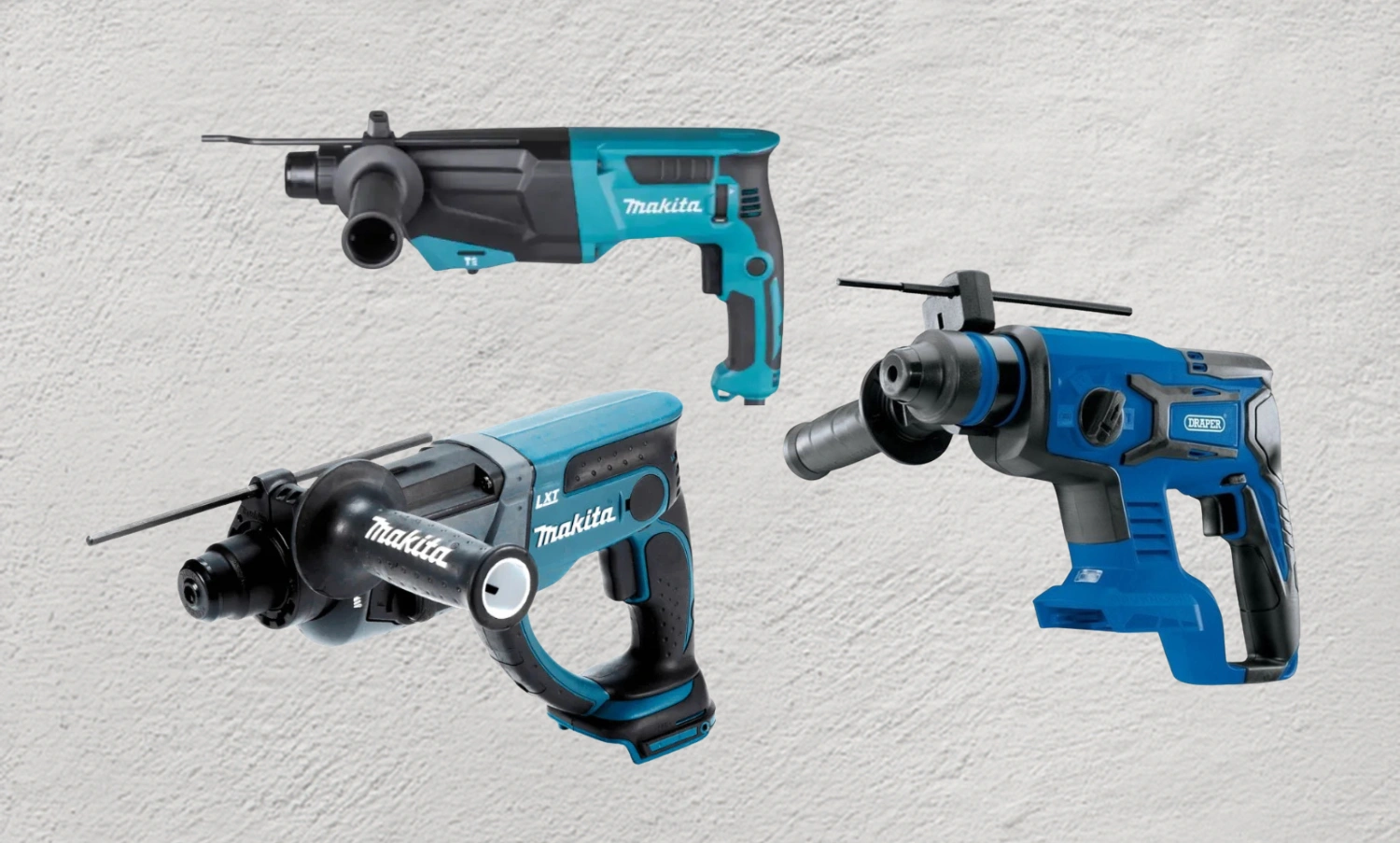
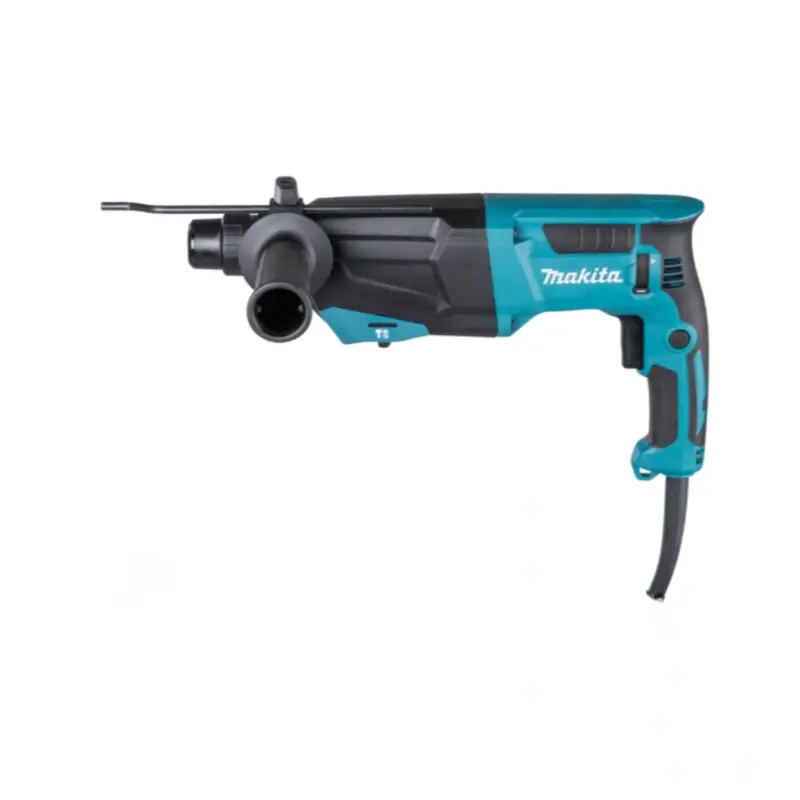
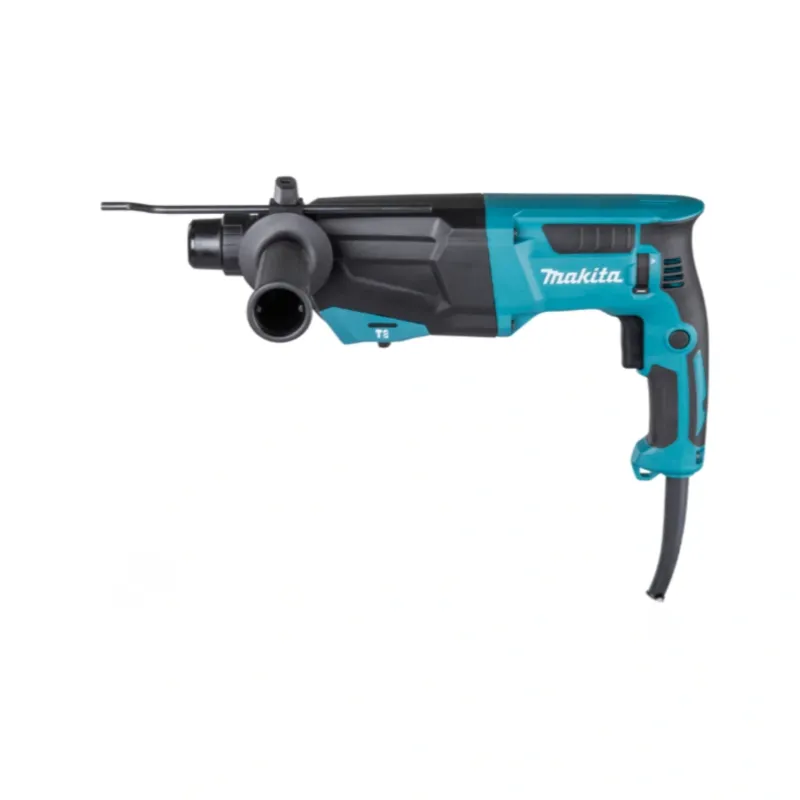
The Makita HR2670 SDS Plus Rotary Hammer Drill is a dependable corded option that delivers consistent 800W performance, making it well suited to continuous masonry drilling and general heavy-duty site use where reliability is essential.
For cordless flexibility, the Makita 18V LXT SDS-Plus Rotary Hammer (Body Only) is widely used across trades, offering strong performance for fixing, drilling, and installation work across varied site conditions.
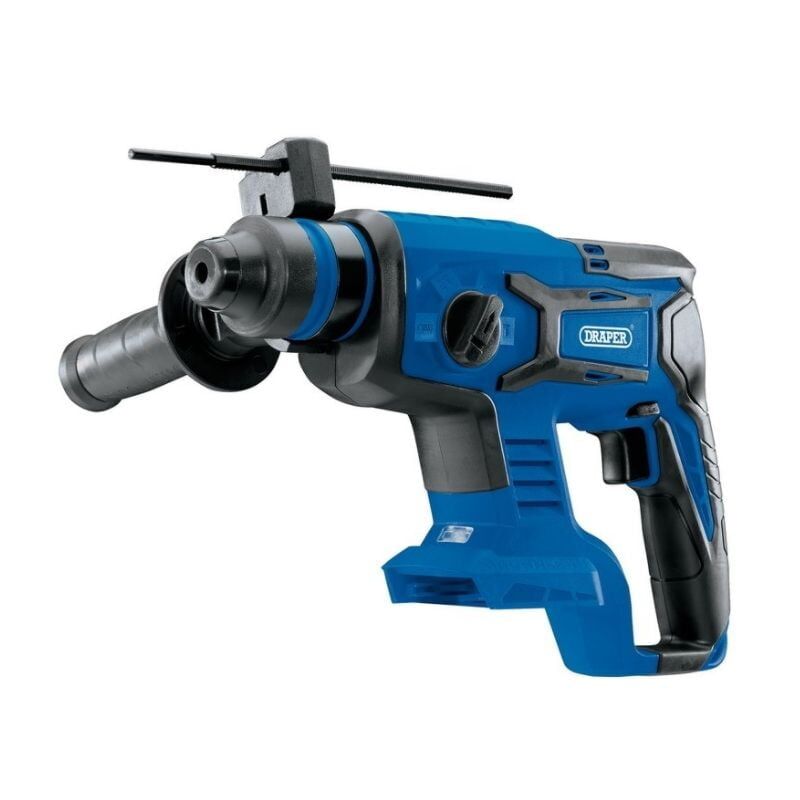
A solid mid-range option is the Draper D20 Brushless SDS Rotary Hammer Drill (Body Only), which provides a balanced combination of power and control, making it suitable for general contractors who need a versatile tool for mixed on-site applications.
Together, these options cover the full spectrum of SDS usage — from light to medium-duty masonry drilling through to more demanding structural fixing and repetitive site work.

Common mistakes when using SDS drills
Even experienced trades can fall into avoidable habits when using SDS drills, particularly when switching between different tools on busy sites or under time pressure.
While SDS systems are designed to be robust and efficient, they still rely on correct setup and use to perform at their best.
One of the most common issues is using the wrong drill mode.
Most SDS drills are equipped with multiple settings, typically including drill-only, hammer-only, and hammer-drill (combined) modes.
Each mode is designed for a specific material and application, and using the incorrect one can significantly reduce efficiency.
For example, using hammer mode on soft materials can cause unnecessary damage, while using drill-only mode on concrete removes the impact function entirely, making progress slow and inefficient.
Another frequent mistake is not using SDS-specific bits.
SDS bits are engineered with a grooved shank that locks securely into the chuck system, allowing the hammer mechanism to transfer energy effectively.
Standard round-shank bits do not engage correctly and can slip, wear prematurely, or fail under load.
Over time, this not only reduces performance but can also increase wear on the tool itself.
Overloading the drill is also a common issue, particularly when working through reinforced concrete or attempting to push through steel reinforcement within masonry.
While SDS drills are designed for heavy-duty applications, they still have limits.
Forcing the tool through rebar or excessive resistance can lead to bit damage, reduced accuracy, and unnecessary strain on the internal hammer mechanism.
In these situations, the correct approach is to use appropriate drill bits and allow the tool’s impact action to do the work rather than applying excessive pressure.
Are SDS drills worth it?
In practical trade terms, SDS drills are absolutely worth the investment if you regularly work with concrete, masonry, or any form of structural fixing.
Their value is not just in raw power, but in the efficiency and consistency they bring to repetitive, high-resistance drilling tasks.
This alone can have a noticeable impact on productivity across a full working day.
Because the hammer mechanism does most of the work, less force is required to push the tool forward, making long drilling sessions less tiring and more controlled.
The controlled hammer action allows cleaner, more predictable results in masonry compared to forcing a standard drill through resistance.
Finally, they help extend overall tool and bit lifespan.
By using impact energy rather than relying purely on rotational force, SDS systems reduce the likelihood of motor burnout and minimise premature wear on drill bits.
For professional trade use, especially in construction, electrical installation, plumbing, and renovation work, SDS drills are not simply a convenience tool — they are essential equipment for efficient and reliable site performance.
Which SDS Drill is right for you?
Once a job moves beyond light fixings and general installation work into structural drilling, repetitive anchoring, or heavy-duty masonry tasks, the SDS system stops being an upgrade and becomes the standard.
In these environments, efficiency, consistency, and tool reliability are not optional — they directly affect productivity on site.
For most professionals, the decision is rarely whether an SDS drill is needed, but rather which SDS system, power source, and specification best fits their day-to-day workload and trade requirements.
Choosing correctly ensures better performance, reduced downtime, and a more efficient workflow across all types of site work.
If you’re unsure which SDS drill is right for your work, our team can provide expert advice based on real trade applications, helping you match the right tool to your specific job requirements and ensuring you invest in equipment that performs properly on site from day one.