Complete guide to Dulux interior paints
Choosing paint should be straightforward—but for many homeowners and DIYers, it quickly becomes confusing.
Walk into any paint aisle and you’re faced with terms like vinyl matt, soft sheen, satinwood, high gloss and undercoat.
Suddenly, what seemed like a simple decorating job feels much more complicated.
The truth is, choosing the right paint makes all the difference—not just to how your finished project looks, but to how long it lasts, how easy it is to maintain, and how much effort the job takes.
This guide breaks down the main differences between popular Dulux paint types for interior use, helping you choose the right product for the right job.
Interior wall paints: Which finish is best?
When customers come into the store looking for interior paint, one of the most common questions is:
“What’s actually the difference between all these wall paints?”
It’s a fair question.
On the shelf, many interior paints can look very similar—most promise good coverage, durability, and a great finish—but in reality, they are designed for very different jobs.
Choosing the right interior wall paint is about much more than colour.
The finish you choose affects how your room looks, how easy your walls are to maintain, how well imperfections are hidden, and ultimately how long your decorating work continues to look fresh.
A family hallway, for example, needs something very different from a quiet guest bedroom, and newly plastered walls need a completely different solution again.
Understanding the differences between matt, soft sheen, and specialist washable paints can save you time, money, and frustration—and help you achieve a finish you’ll be happy with for years.
A classic choice for most rooms
If you are looking for a classic interior wall finish, Vinyl Matt Pure Brilliant White is often the first place to start.
It remains one of the most popular choices for Irish homes because it delivers the clean, bright finish most homeowners want while being practical and easy to apply.
Matt finishes are loved for their soft, modern appearance.
Because they reflect very little light, they create a calm, understated look that works beautifully in living rooms, bedrooms, dining rooms, and hallways.
More importantly, that low-reflection finish helps disguise imperfections.
If your walls have small cracks, minor dents, patch repairs, or slightly uneven plaster, a matt paint will help hide these flaws rather than drawing attention to them.
That makes Vinyl Matt Pure Brilliant White particularly useful in older homes, where walls often have a little more character—and a few more imperfections.
If your goal is simply a fresh, bright white room without every bump and blemish standing out, this is often the ideal choice.

The best option for new plaster
Fresh plaster can be one of the most challenging surfaces to paint.
It absorbs paint rapidly, often unevenly, and can leave cheaper paints looking patchy or requiring multiple extra coats.
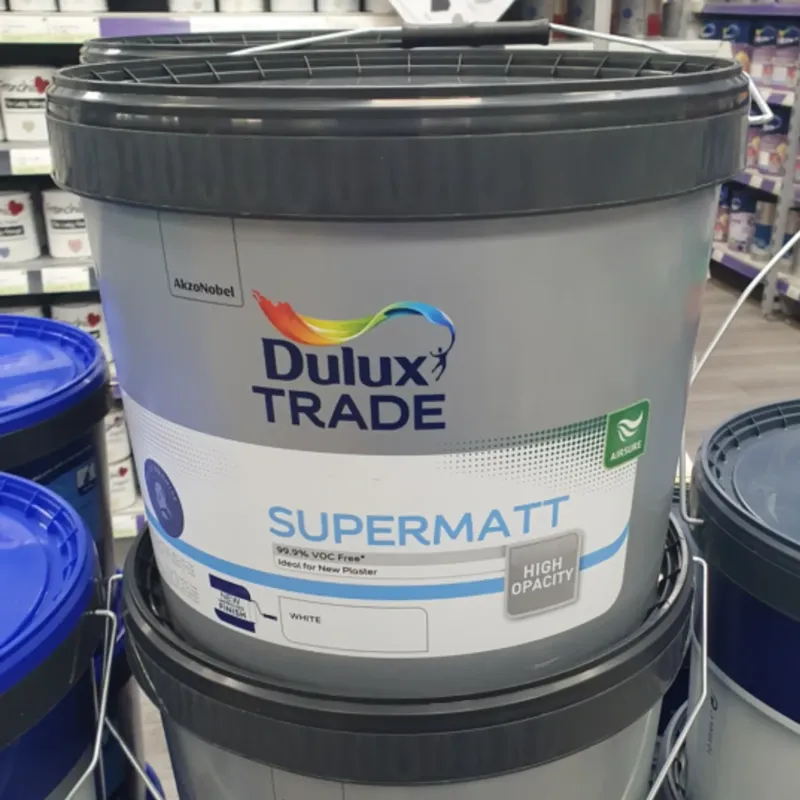
That’s where Supermatt Trade Dulux Brilliant White really comes into its own.
As a trade-grade product, it has been designed for professional decorators who need dependable results and strong coverage.
It offers excellent opacity and handles porous surfaces much better than standard retail emulsions.
For homeowners undertaking renovations, extensions, or full-room redecorations, this can save considerable time and effort.
It is especially popular for newly skimmed walls and ceilings, where achieving a consistent finish can otherwise be difficult.
If you’re decorating a new build, converting an attic, or tackling a major renovation project, this is often the smarter starting point.
Alternative to bright white
While brilliant white continues to dominate modern interiors, Magnolia still has a loyal following—and for good reason.
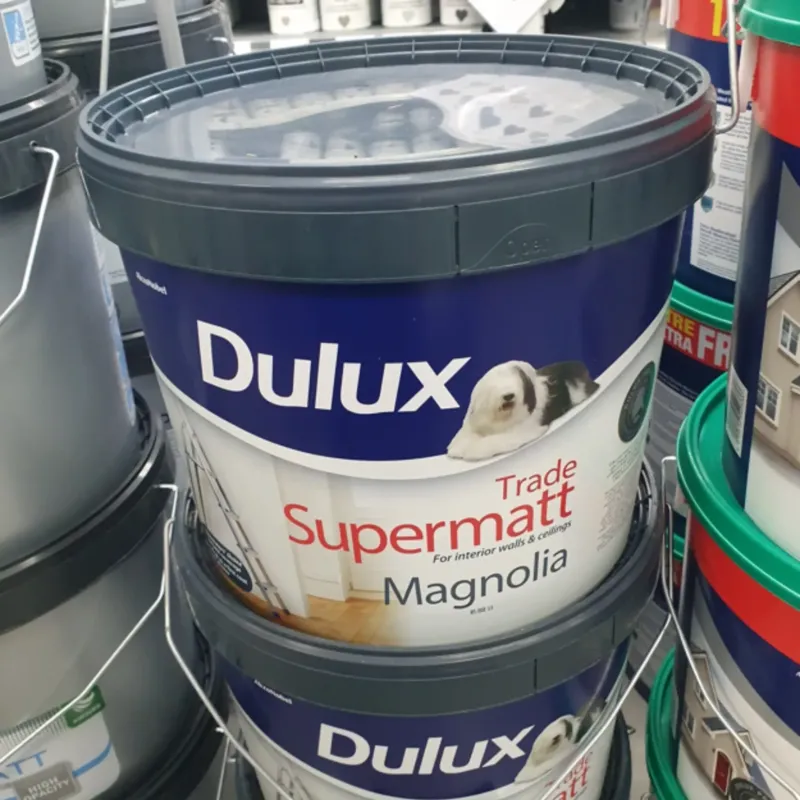
Dulux Trade Supermatt Magnolia offers a warmer, softer alternative to stark white, making rooms feel more inviting and less clinical.
It remains a popular option in rental properties, traditional homes, and among homeowners looking to refresh interiors without dramatically changing the feel of the room.
For landlords and property managers, magnolia is often chosen because it offers broad appeal and creates a clean, neutral backdrop that suits almost any décor.
For homeowners, it can be an excellent way to add warmth, particularly in older houses where softer tones often complement original features better than bright whites.
It’s proof that, sometimes, traditional options remain popular because they simply work.
Where style meets practicality
Many homeowners love the appearance of matt paint—but worry about how easy it is to keep clean.
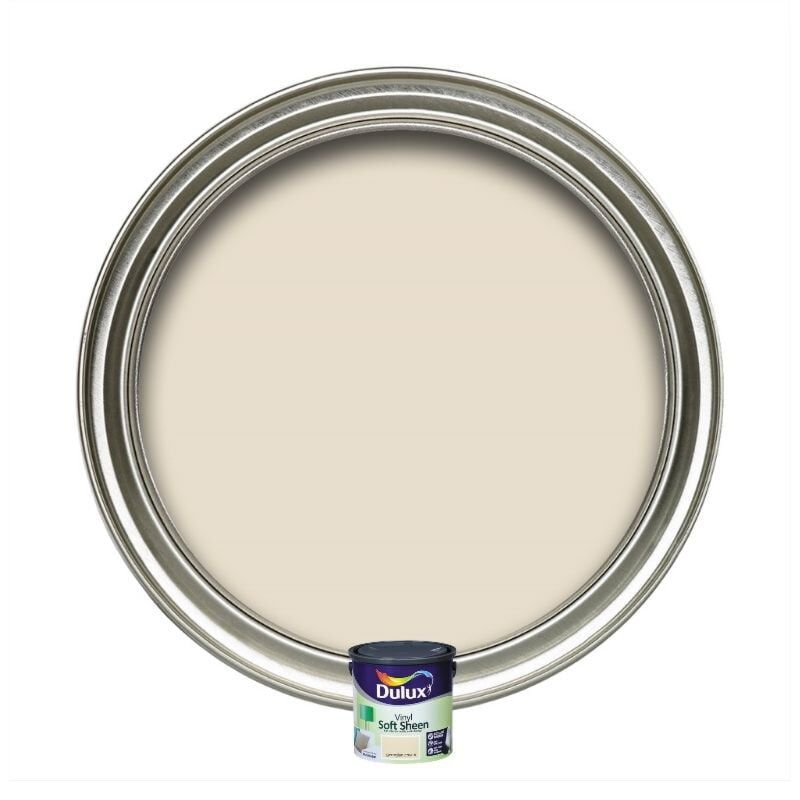
That’s exactly where Dulux Soft Sheen Emulsion Paint for Walls & Ceilings fits in.
Soft sheen sits neatly between matt and silk.
It has a subtle reflective quality—not glossy or shiny, but just enough to make walls easier to wipe down and maintain.
This added durability makes it particularly useful in homes where walls face everyday wear and tear.
Busy family homes often benefit most from this type of finish.
Hallways, children’s bedrooms, home offices, and dining rooms all experience regular contact, whether from fingerprints, bags brushing walls, or general day-to-day life.
A soft sheen finish gives you a little more resilience without losing the refined appearance many people prefer.
It’s often the perfect compromise for homeowners who want practicality without sacrificing style.
Built for busy spaces
Some rooms simply work harder than others.
Kitchens, stairs, hallways, and landings tend to see far more foot traffic than formal living rooms or spare bedrooms, which means the paint needs to work harder too.
Dulux Vinyl Soft Sheen Brilliant White is designed for exactly these spaces.
It offers the same subtle finish as standard soft sheen but with enhanced durability, helping walls withstand everyday knocks, marks, and regular cleaning.
In homes with children, pets, or simply a lot of movement, this extra toughness can make a noticeable difference over time.
Instead of repainting scuffed walls every year, homeowners often find this type of product helps keep rooms looking freshly decorated for much longer.


Designed for everyday family living
One of the biggest decorating frustrations people face is beautifully painted walls that quickly become marked.
Fingerprints in the hallway. Scuffs on the stairs. Food splashes in the dining room. Pencil marks in children’s bedrooms.
That’s exactly why Dulux Easycare Washable Matt Interior Paint has become so popular.
It gives you the stylish, modern appearance of matt paint—but with much greater durability.
Unlike standard matt emulsions, it has been specifically formulated to resist stains and tolerate repeated cleaning, making it ideal for real homes where life happens.
For young families especially, this can be transformative.
Instead of worrying every time someone brushes a wall, you can simply wipe marks away and carry on.
It works particularly well in kitchens, playrooms, dining areas, hallways, and children’s bedrooms—anywhere that sees regular mess and movement.
For many homeowners, it offers the best of both worlds: a beautiful finish and genuine peace of mind.
Interior wall paints comparison table
To make the differences clearer, here’s a simple comparison of the main interior wall paint types and where they work best:
|
Paint type |
Best for |
Finish / Look |
Key benefits |
Limitations |
|
General living spaces (bedrooms, lounges, dining rooms, hallways) |
Flat, low-sheen finish |
Hides imperfections well, modern appearance, easy to apply |
Less resistant to marks and cleaning |
|
|
New plaster, renovations, large redecoration projects |
Very flat matt finish |
Excellent coverage on porous surfaces, strong opacity, ideal for first coats |
Not designed for heavy cleaning or scrubbing |
|
|
Traditional interiors, rental properties, neutral schemes |
Soft warm matt finish |
Warm tone, widely appealing, good for consistent redecoration |
Less contemporary than white finishes |
|
|
Family homes, mixed-use rooms |
Subtle sheen (between matt and silk) |
More washable than matt, good balance of style and durability |
Slightly more reflective than matt |
|
|
High-traffic areas (hallways, stairs, kitchens) |
Soft reflective finish |
Strong durability, wipeable, resists marks and wear |
Slight sheen may highlight wall imperfections |
|
|
Busy family homes, kids’ rooms, kitchens, dining areas |
Matt finish with protective coating |
Washable, stain-resistant, keeps matt look with added durability |
Slightly higher cost vs standard matt |
Ceiling paint: Why use a specialist product?
When decorating a room, ceilings are often treated as an afterthought.
Many people assume that whatever paint is being used on the walls can simply be rolled overhead and the job is done.
Technically, that can work—but it rarely delivers the best result.
Ceilings present very different challenges from walls.
They catch light differently, they tend to highlight roller marks more easily, and because of the awkward angle involved in painting them, application mistakes are much more noticeable.
A ceiling also needs to look smooth and uniform across a large uninterrupted surface, which can be surprisingly difficult to achieve with standard wall paint.
That is exactly why specialist ceiling paints exist.
A product such as Dulux Ceiling Paint is specifically formulated for overhead work, since it’s designed to minimise roller splatter—something every DIY decorator quickly appreciates after the first few minutes of painting above their head.
They also provide a much flatter finish than standard wall paints, which helps disguise minor imperfections such as uneven plaster, hairline cracks, or patch repairs.
Another major advantage is reduced lap marking.
With ordinary emulsion, it is common to see overlapping roller lines once the ceiling dries, particularly in bright daylight.
Specialist ceiling paint is developed to dry more evenly, helping you achieve that clean, seamless finish that makes a room feel properly refreshed.
For homeowners dealing with tired, slightly yellowed, or patchy ceilings, using a dedicated product can make a dramatic difference.
It brightens the entire room, makes spaces feel cleaner and more spacious, and often transforms a room more than repainting the walls alone.
It may seem like a small detail, but choosing the right ceiling paint is one of those decisions that often separates an average decorating job from a professional-looking finish.
Primers & undercoats: Do you really need them?
It’s one of the most common questions customers ask us before starting a decorating project:
“Do I really need primer or undercoat, or can I just go straight on with the topcoat?”
It’s an understandable question.
After all, skipping a step saves both time and money—or at least it seems that way.
Leaving out primer or undercoat is one of the most common reasons decorating jobs fail early.
It is often the cause of patchy colour, poor adhesion, uneven sheen, and paint that chips or peels far sooner than expected.
Many of the issues people blame on “bad paint” begin with inadequate preparation underneath.
Primer and undercoat may not be the most exciting part of a decorating project, but they are often the difference between a finish that lasts a few months and one that looks good for years.
The simplest way to think about it is this: your topcoat can only perform as well as the surface underneath allows.
If you are painting over a dark colour and trying to move to something lighter, an undercoat helps block the original colour and reduces the number of finishing coats needed.
If you are painting a bare or porous surface such as new plaster, it helps seal the surface and improves even absorption.
If the surface has a previously sealed or shiny finish, it helps improve adhesion so the new paint bonds properly.
And if you are switching from oil-based to water-based products—or vice versa—it provides an essential bridge between the two systems.
Skipping this stage can sometimes work, but it often creates more work later.
Quick-dry primer undercoat
For homeowners looking for a quicker, cleaner, and more modern decorating system, AquaMax Water-Based Primer Undercoat is an excellent choice.
Water-based primers have become increasingly popular in Irish homes because they fit naturally with modern decorating habits.
They dry faster, produce much less odour, and make the entire job feel easier—particularly when decorating occupied homes where disruption needs to be kept to a minimum.
This makes AquaMax Water-Based Primer Undercoat particularly attractive for indoor projects such as skirting boards, doors, architraves, and interior timber where speed matters and ventilation may be limited.
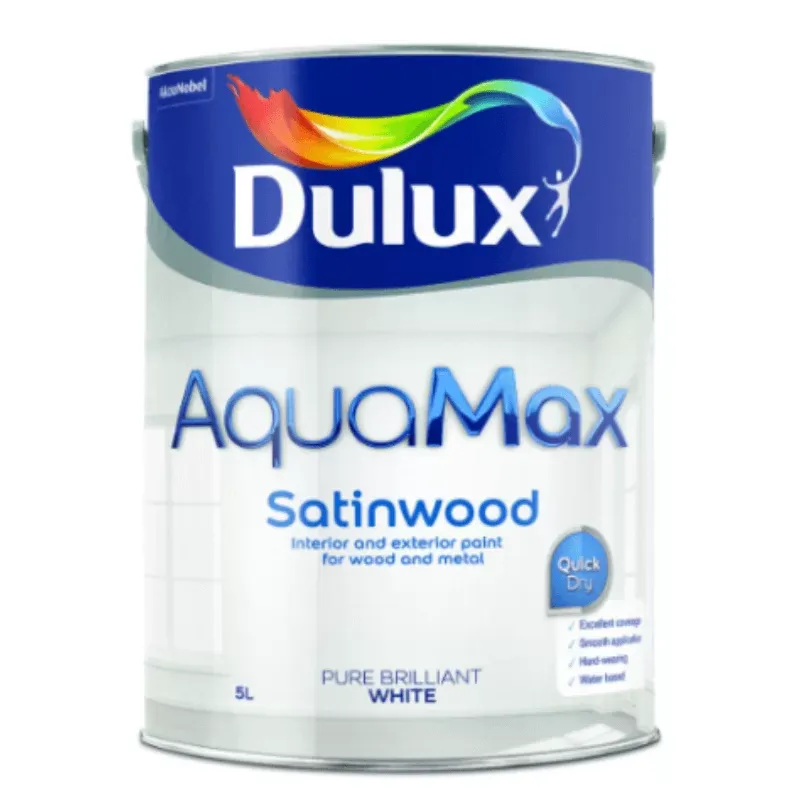
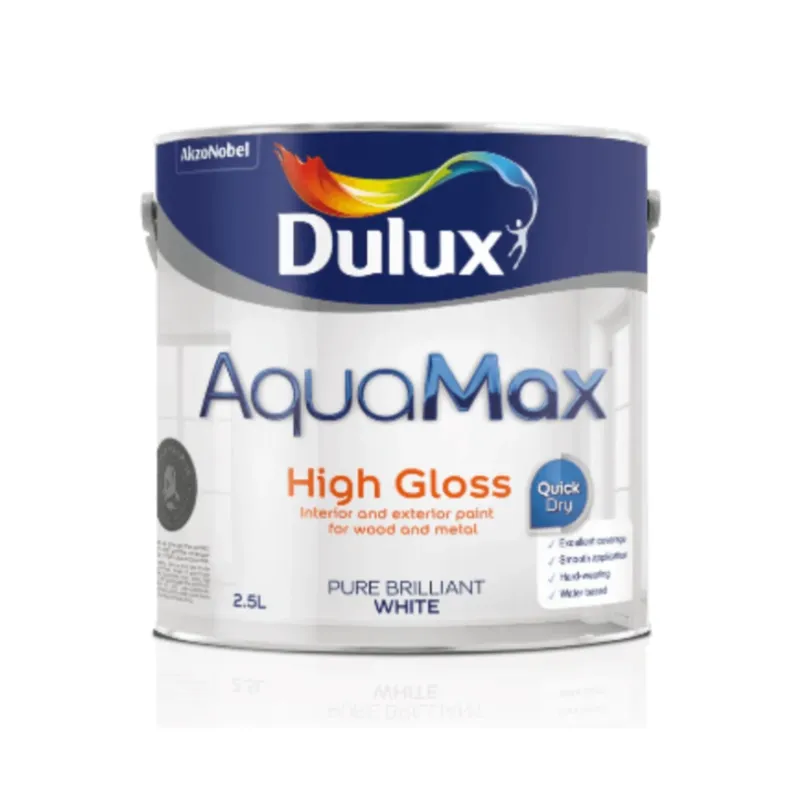
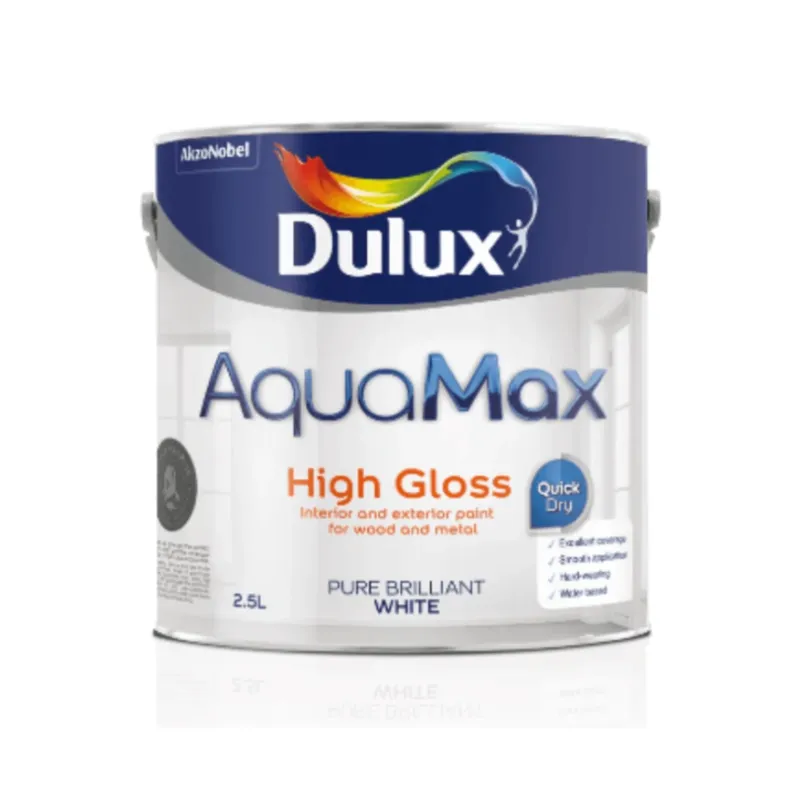
It also pairs perfectly with water-based topcoats such as Dulux AquaMax Satinwood or Aquamax High Gloss Pure Brilliant White, helping the entire system work together properly.
Homeowners often underestimate how much smoother the final result can look when using a compatible primer underneath.
Brush marks reduce, adhesion improves, and the topcoat generally looks richer and more even.
For modern water-based decorating systems, it is often the smartest foundation to start with.


Reliable undercoat base
For many decorating jobs, a traditional undercoat remains a key step in achieving a consistent finish.
Dulux Undercoat Pure Brilliant White and Dulux Undercoat Brilliant White are designed to create the perfect base for your finishing coat.
Their role is simple but hugely important: they improve adhesion, increase opacity, and help your final paint perform exactly as intended.
That means fewer problems with patchiness, stronger colour coverage, and a noticeably smoother finish.
This is especially valuable when painting interior surfaces that have small imperfections, uneven patches, or previous coatings that affect finish consistency. A proper undercoat helps even out absorption and creates a more uniform base for your topcoat.
It can also save time and money in the long run. Homeowners often skip undercoat hoping to reduce paint usage, only to discover they need extra finishing coats—or that the final result is uneven and needs redoing later.
In that sense, undercoat is not an unnecessary extra. It is preventative maintenance.


Choosing the right paint starts with the right questions
By this point, one thing is hopefully clear: choosing paint is not simply about picking a colour and grabbing the nearest tin off the shelf.
Even within a trusted range like Dulux, different products are designed for very different jobs.
A finish that works well on interior walls may not be suitable for ceilings, and a paint suited to a low-use bedroom may struggle in a busy hallway or kitchen.
That’s why it helps to take a few moments to think through the project before you buy—it can save time, effort, and unnecessary repainting later.
Start with the surface itself. Are you painting walls or ceilings?
Each requires different levels of durability, coverage, and finish.
Next, consider how the space is used.
High-traffic areas such as kitchens, hallways, and children’s rooms need more durable, washable finishes than occasional-use rooms.
The finish also plays an important role.
Matt creates a smooth, modern look and helps disguise imperfections, soft sheen offers improved cleanability for everyday use, and satin or gloss finishes are best suited to woodwork and trim where durability and easy maintenance are important.
Practical factors matter too.
In occupied homes, water-based systems are often preferred due to faster drying times, lower odour, and easier application compared to traditional alternatives.
When these questions are answered first, selecting the right paint becomes much more straightforward.
And if you’re still unsure, that’s where we can help.
At MyBuildingSupplies.ie, we help homeowners across Ireland choose the right products for their project every day—whether it’s a simple room refresh or a full renovation.
A bit of guidance at the start can make all the difference to the final finish.
Sometimes the right result doesn’t come from changing the colour—it comes from choosing the right product from the start.