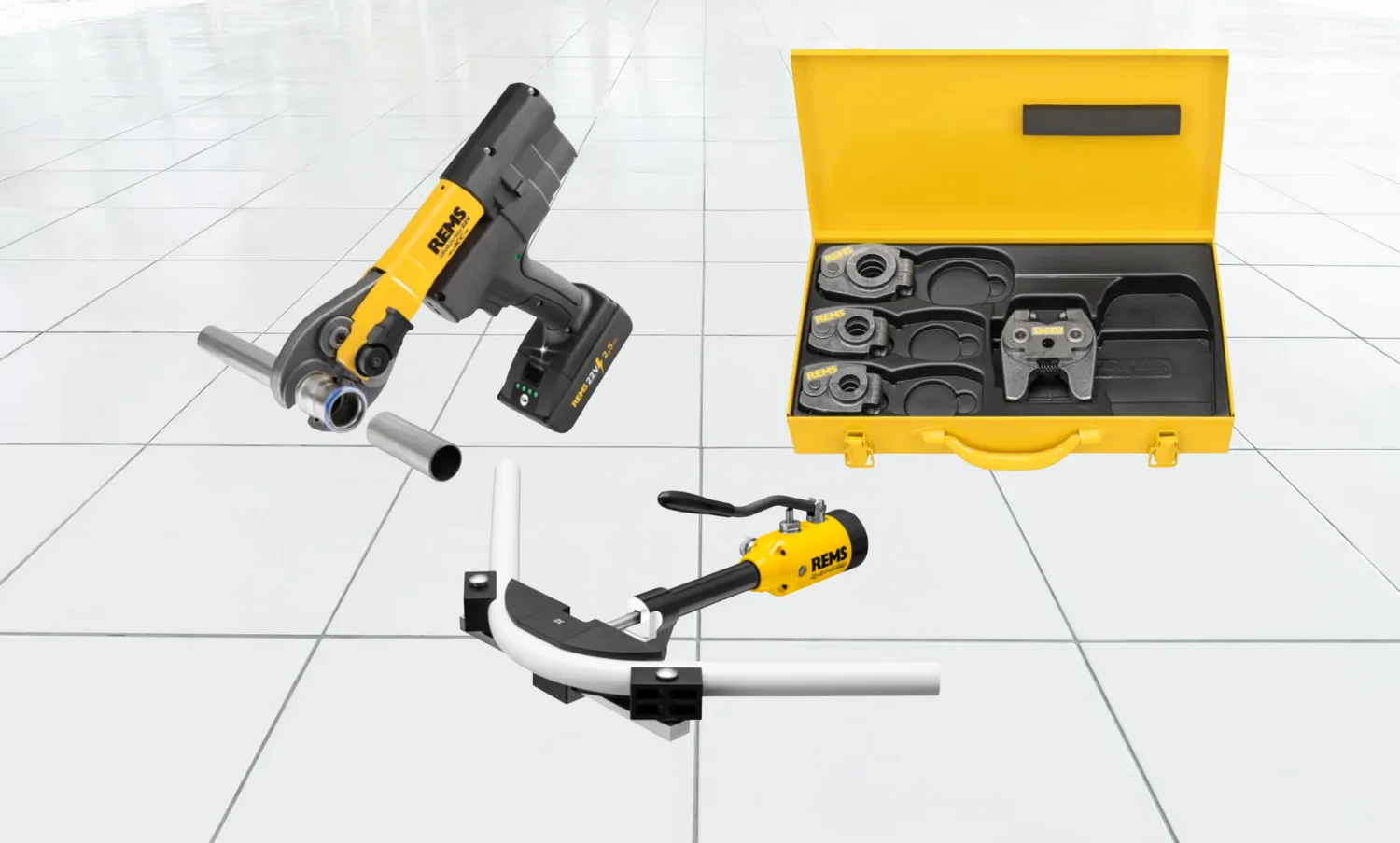
REMS plumbing tools: Precision, efficiency & reliability
In plumbing and heating, experience and skill will always matter.
But ask any professional plumber or heating engineer, and they'll tell you that having the right tools can make the difference between a straightforward installation and a frustrating day on site.
Working in tight spaces, dealing with different pipe materials, making reliable connections and keeping projects on schedule are all part of the job.
While the fundamentals of plumbing haven't changed, the equipment used to get the work done has come a long way.
Manufacturers such as REMS have played a role in that evolution, developing specialist tools that make everyday tasks such as pipe cutting, bending, pressing and pressure testing more efficient and precise.
But what difference do these tools actually make on the job, and why is choosing the right equipment so important?
Modern plumbing demands more than just good workmanship
Today's plumbing and heating installations come with their own set of challenges.
Whether it's a new-build home, a heating system upgrade or maintenance in an older property, tradespeople are expected to work efficiently while maintaining high standards.
Time is often limited, access isn't always ideal, and different pipe materials require different installation methods.
One of the biggest developments in recent years has been the increasing use of press-fit plumbing systems.
Traditionally, joining copper pipe often involved soldering, a skilled process requiring heat, preparation and careful attention to the working environment.
Press-fit systems offer an alternative, using specially designed fittings that are compressed around the pipe with a compatible pressing tool.
This method eliminates the need for an open flame during the jointing process, making it particularly useful in certain renovation projects, occupied buildings and restricted working areas.
For professionals carrying out installations with multiple connections, press-fit technology can also help reduce installation time.
However, the quality of the finished connection still depends on proper pipe preparation, compatible fittings and the correct pressing equipment.
-
- REMS Pressing Tongs for Instantor, Sanbra and Conex Irish Copper Fittings€175.45 Regular Price €175.45


Working smarter with professional press tools
Anyone who has worked on a plumbing installation knows that pipe connections aren't always conveniently positioned.
Sometimes you're working behind a hot water cylinder, beneath floorboards or inside a crowded service cupboard.
In these situations, a bulky tool or awkward setup can slow the entire job down.
This is where compact, cordless equipment becomes particularly valuable.
The REMS Mini Press Tool Pack 22V is an example of how modern tool design addresses the practical needs of professional installers.
Its battery-powered operation allows greater freedom of movement, while its compact construction helps when working where space is limited.
One of its useful features is the Automatic Circuit Control (ACC), which allows the tool to complete the pressing cycle automatically once activated.
This helps provide a consistent pressing action, particularly valuable when working through multiple connections during an installation.
Depending on the configuration, REMS Mini Press equipment is available in straight or pistol-grip designs, allowing professionals to choose a tool that better suits their working preferences and access requirements.
The range also includes the REMS Mini Press Tool Pack 14V, providing another cordless option for professional installers.
Rather than repeatedly setting up equipment or dealing with cables, installers can move between suitable connections more easily.
For contractors working on larger projects, where dozens of fittings may need to be pressed, these small improvements in efficiency can add up.
Of course, the pressing tool itself is only part of the equation.
Different fitting systems require specific jaw profiles, which is why manufacturers such as REMS also offer dedicated pressing tongs, jaws and press rings.
For example, the REMS range includes pressing tongs for compatible Instantor, Sanbra and Conex Irish copper fitting systems, along with TH-profile pressing accessories, including a 16–26mm press ring set with Mini Z8 intermediate jaw and 32mm press-fit jaws.
These accessories are designed for particular fitting profiles and dimensions.
For professionals working across different plumbing and heating systems, having the correct pressing jaws is just as important as having the right press tool.
For anyone less familiar with press-fit systems, the pressing jaw is the part of the tool that fits around the connection and compresses the fitting.
Its shape must match the fitting system being installed.
Using the wrong jaw profile can result in an incorrectly formed connection, even when the pressing machine itself is functioning properly.
Choosing the correct combination of tool, jaws and fittings is essential.
Even the best equipment cannot compensate for incompatible components or incorrect installation.
The real advantage of professional pressing equipment isn't simply speed. It's the ability to work efficiently while producing consistent results.
Precision starts before the pipes are connected
When discussing professional plumbing equipment, power tools often get most of the attention.
Yet some of the most important stages of an installation happen before a connection is even made.
Take something as basic as cutting a pipe.
A clean, square cut makes pipe preparation and fitting assembly easier.
An uneven cut, on the other hand, can create difficulties with alignment, insertion and sealing.
For plumbers working with plastic and multilayer pipe systems, purpose-built cutting tools can make a noticeable difference.
The REMS Multilayer/Plastic Pipe Cutter, for example, is designed to cut suitable pipes up to 42mm in diameter, providing controlled cutting without the need for a saw.
Its compact construction makes it practical in restricted working areas, while its one-handed operation and quick-return mechanism are particularly useful when making repeated cuts throughout an installation.
Multilayer pipes, which combine different material layers in a single pipe, are widely used in modern heating and plumbing systems.
They offer flexibility, but correct cutting and preparation are essential for reliable connections.
A clean cut is only the first step.
Depending on the pipe and fitting system, further preparation such as deburring or calibration may be required before the connection is made.
The same attention to detail applies to pipe bending.
Rather than relying entirely on additional elbows and fittings to change direction, installers can sometimes form bends directly in the pipe, provided the material and installation requirements allow it.
Tools such as the REMS Hydro-Swing Hand Pipe Bender help professionals produce controlled bends using hydraulic assistance, reducing the physical effort required.
Designed for cold bending suitable pipe materials, the Hydro-Swing uses appropriate bending formers to help achieve accurate pipe positioning without relying on unnecessary connection fittings.
This can be particularly useful when routing pipework around obstacles, working on heating installations or creating neat pipe layouts where space is limited.
A properly formed bend can create a neater pipe layout and, in suitable applications, reduce the number of separate fittings needed.
But accuracy remains essential.
Bending a pipe too sharply or using unsuitable equipment can damage the material and compromise the installation.
Professionals must use the correct bending former and respect the minimum bending radius specified for the pipe.
These tasks may seem minor compared with the rest of a plumbing project, but getting them right is fundamental to achieving a professional finish.
Reliability matters when time is money
For professional tradespeople, tools aren't simply accessories.
They're an essential part of earning a living.
A tool that performs consistently helps keep work moving.
One that is unreliable, uncomfortable to use or unsuitable for the job can quickly lead to delays and frustration.
Consider a heating system upgrade in an occupied home.
The installer may need to isolate the system, remove existing pipework, prepare new connections and complete the necessary testing before restoring service.
Every stage needs to be properly managed, particularly when the homeowner is relying on the work being completed within a limited timeframe.
Having dependable cutting, pressing and bending equipment makes it easier to plan and carry out the installation efficiently.
For example, a cordless REMS press tool can simplify work across multiple connection points, while a dedicated pipe cutter helps maintain accurate preparation.
Where pipe routes require changes in direction, a suitable bending tool can reduce the time spent working with additional fittings.
Individually, these may seem like small improvements.
Across a full installation, however, the benefits of using equipment designed for the task can become much more noticeable.
This is one reason specialist tool manufacturers such as REMS have become familiar names among plumbing and heating professionals.
Their equipment is designed around specific installation tasks, from repetitive pipe pressing to accurate pipe preparation.
For a contractor using these tools regularly, the long-term value often comes from the time saved, the consistency of the work and the reduced effort involved in everyday tasks.
A quality installation doesn't end with the last connection
Once the pipes are installed and the fittings are in place, there's another important stage before the job can be considered complete: testing.
Pressure testing is used to check the integrity of suitable plumbing and heating systems before they are put into service.
During a pressure test, the system is subjected to a specified test pressure under controlled conditions, allowing the installer to check for signs of leakage or pressure loss.
For homeowners, this is an important part of understanding what goes into a professional installation.
A neatly fitted pipe system may look finished, but its performance still needs to be verified.
Professional testing equipment, such as the REMS Pressure Test Bucket, allows installers to carry out pressure testing using a manual pump and pressure gauge.
The REMS unit features a 12-litre container, an integrated pressure gauge and a maximum testing capability of 60 bar, making it suitable for pressure and tightness testing of compatible installations.
The manual pump allows the installer to build up the required test pressure and monitor the system during the prescribed testing procedure.
Although the equipment is capable of reaching 60 bar, the correct pressure depends on the type of system being tested.
Installers must always follow the relevant manufacturer's instructions and applicable testing standards.
For professionals, reliable pressure-testing equipment is an essential part of completing the installation correctly.
For homeowners, it provides reassurance that the system has been checked before it is put into everyday use.
It's a reminder that plumbing isn't just about assembling components.
Good workmanship extends from initial preparation right through to final inspection and testing.
Is investing in professional plumbing tools worth it?
For tradespeople who regularly work on plumbing and heating installations, choosing professional-grade equipment can be a worthwhile long-term investment.
But buying the most expensive tool isn't necessarily the same as buying the right one.
A plumber who frequently installs press-fit systems may benefit considerably from a cordless pressing tool and a selection of compatible jaws.
Someone who works primarily with multilayer pipe might place greater importance on reliable cutters and bending equipment.
Likewise, contractors regularly commissioning new pipework or heating installations need suitable pressure-testing equipment to complete the job properly.
The key is understanding the work you do most often.
Before investing in new equipment, it's worth considering the pipe materials and sizes you typically use, the fitting systems you work with, and how regularly you'll need the tool.
For pressing equipment in particular, checking the compatibility of the machine, jaw profiles and fitting systems before purchasing can help avoid unnecessary costs or installation problems later.
Comfort, portability and accessibility also matter, particularly for professionals who spend long hours working on installations.
And for homeowners planning plumbing or heating upgrades, understanding the equipment used by their contractor can provide useful insight into why certain installation methods are chosen.
Professional tools don't replace experience or proper training, but they can help skilled tradespeople work more efficiently and confidently.
Better tools, better results
Plumbing and heating technology continues to evolve, bringing new materials, installation techniques and equipment into everyday use.
Yet one thing remains unchanged: the quality of an installation depends on the knowledge, care and workmanship behind it.
The right tools support that workmanship.
Whether it's making a clean pipe cut, forming an accurate bend, completing a press-fit connection or testing a finished system, reliable equipment helps professionals maintain the standards their customers expect.
REMS provides a range of specialist tools developed for these everyday challenges, helping plumbers and heating engineers approach their work with equipment suited to the task.
From the cordless REMS Mini Press tools and their compatible pressing jaws to specialist cutting, bending and pressure-testing equipment, each tool has a role in making installation work more efficient, accurate and manageable.
At MyBuildingSupplies.ie, we offer a selection of REMS professional plumbing tools and accessories for a variety of plumbing and heating applications.
Whether you're upgrading your professional toolkit or looking for equipment for an upcoming installation, choosing the right tools is an important part of getting the job done properly.
If you need help choosing the right REMS tool for your project, our team can guide you towards the best option for your requirements.