How to Install Composite Fencing
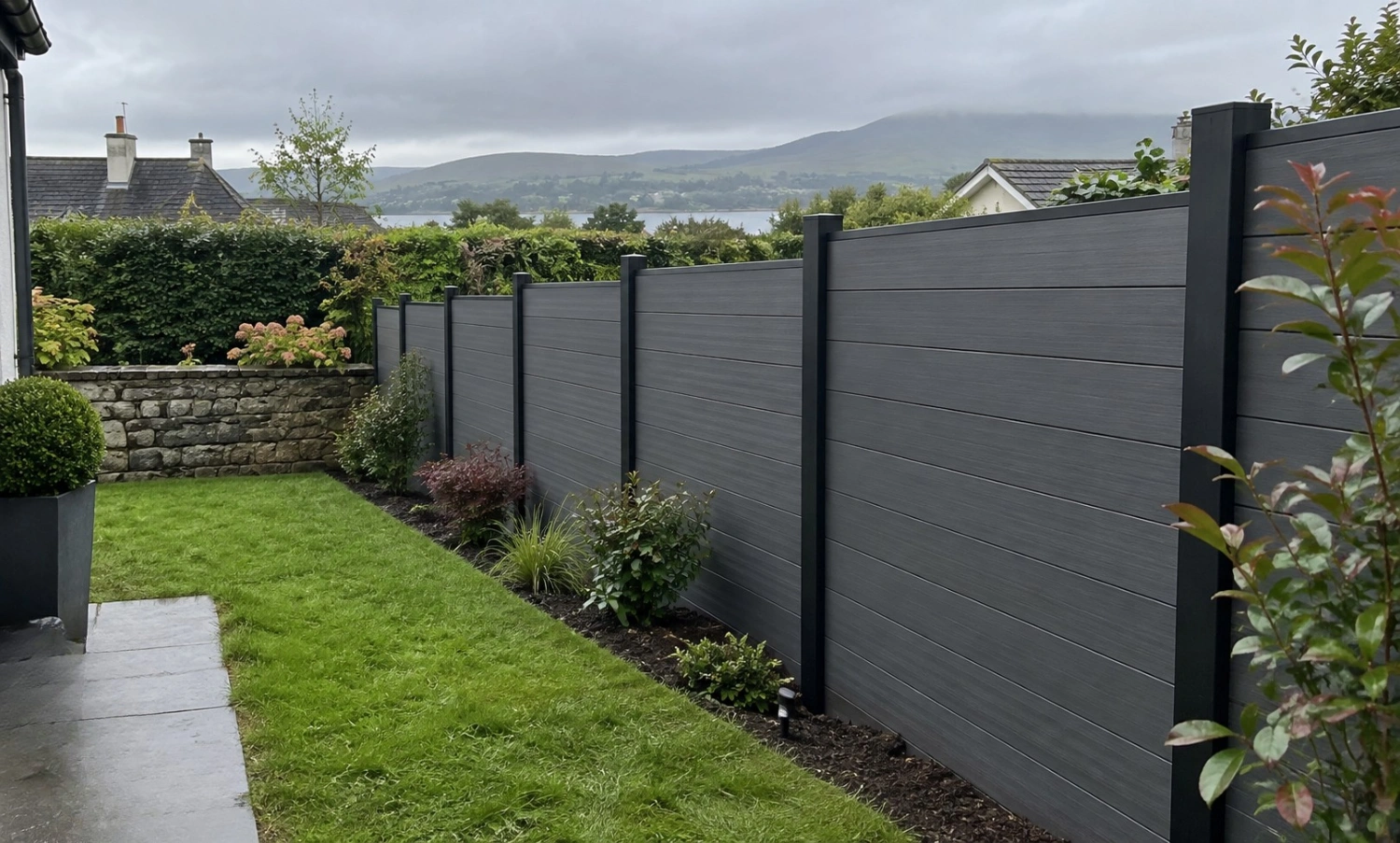
Composite fencing is a practical choice for homeowners who want a smart, modern boundary without the regular painting, staining and maintenance associated with traditional timber fencing.
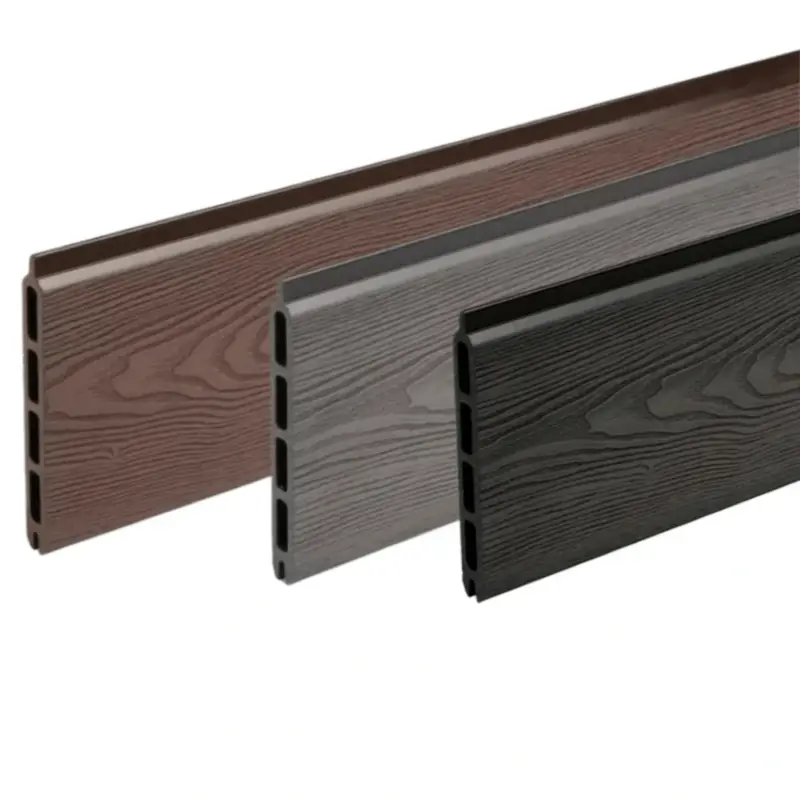
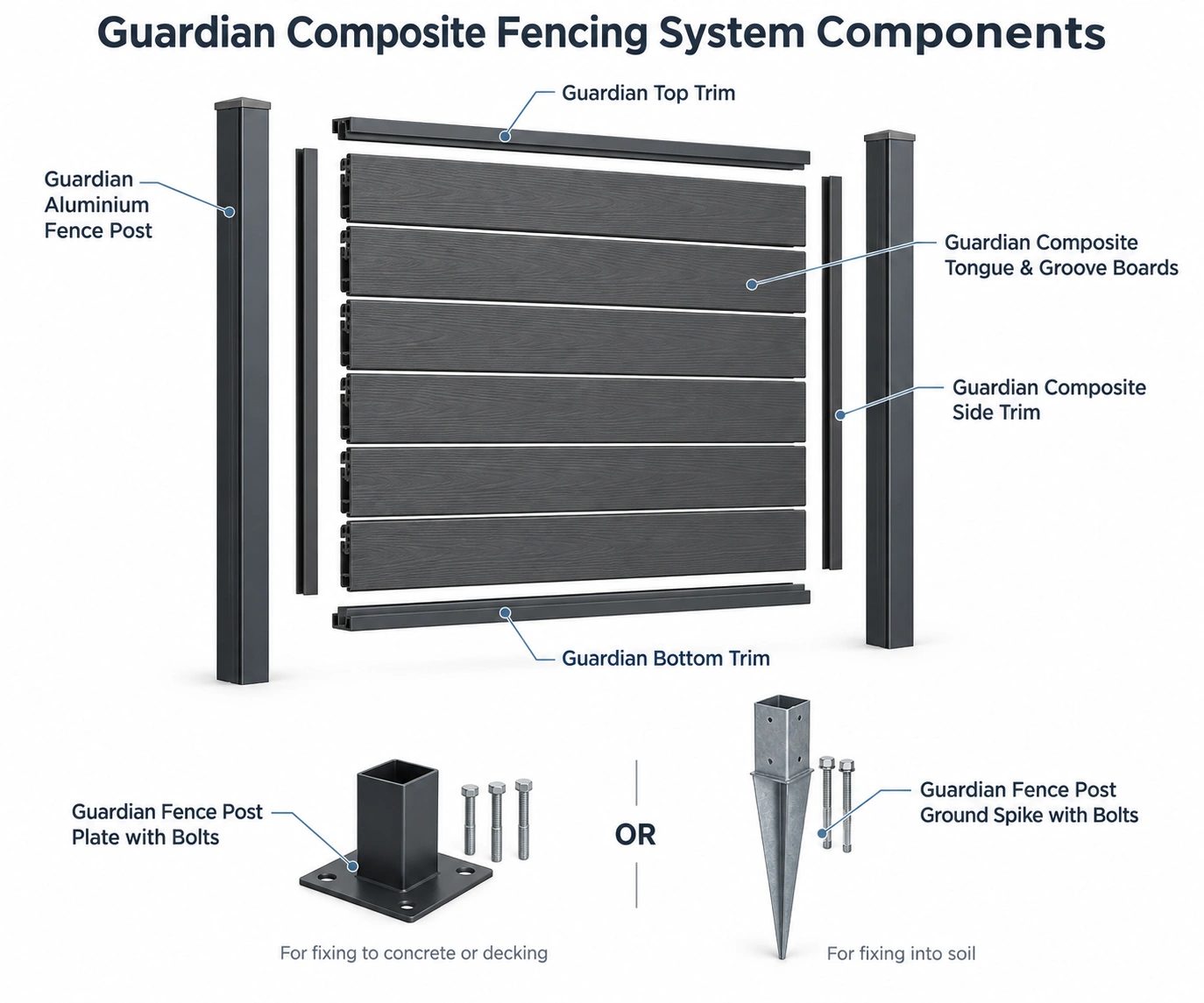
The Guardian Composite Fencing System is designed as a complete modular solution, using composite tongue-and-groove boards, aluminium posts, finishing trims and a choice of post fixing methods.
This guide explains the main components you will need and walks through the basic installation process.
What you need to install composite fencing
A typical installation will require the following components:
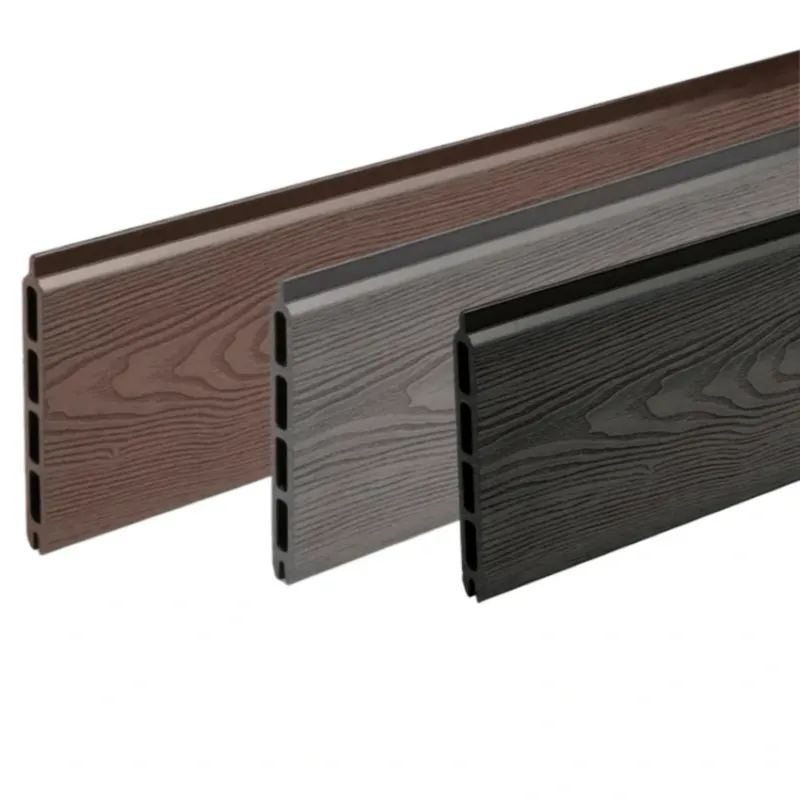
- Guardian Composite Tongue and Groove Fence Boards – 2-Pack
- Guardian Aluminium Fence Post for Composite Fencing
- Guardian Top/Bottom Fence Trim Pack
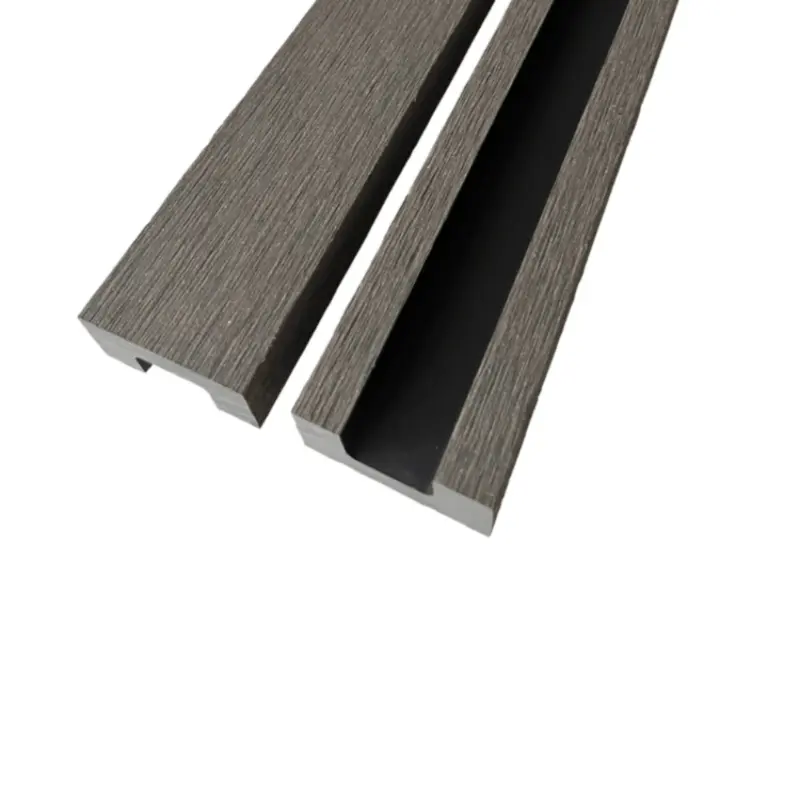
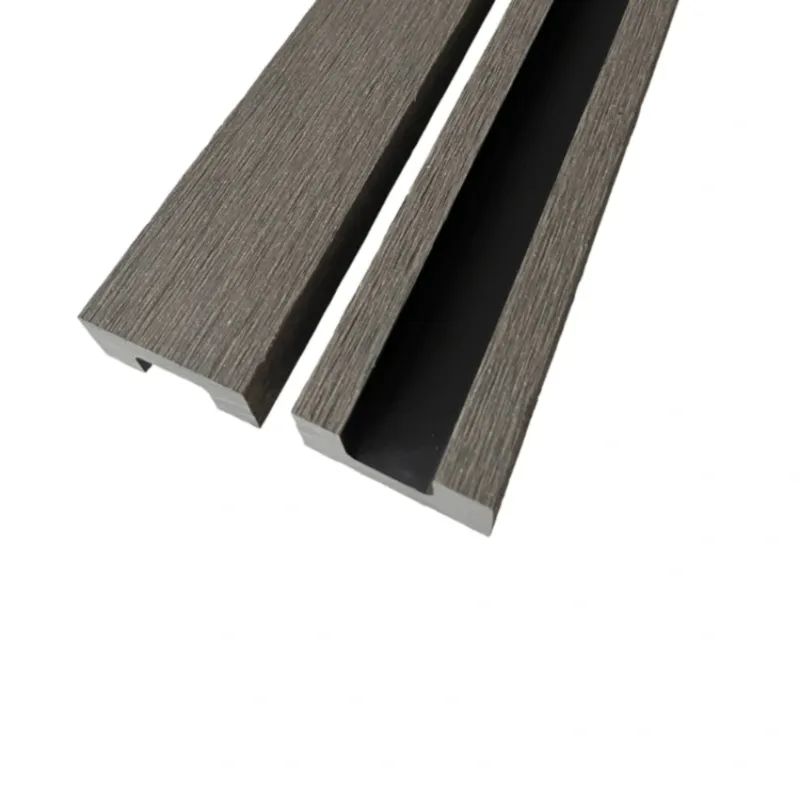
- Guardian Fence Composite Trim 1.8m Pack (2)
- Guardian Fence Post Plate with Bolts
- Guardian Fence Post Ground Spike with Bolts
The exact combination you need will depend on the length of the fence, the finished height and whether you are fixing the posts to a solid surface or into the ground.
Step 1: Measure the fence area
Start by measuring the full length of the proposed fence line.
The Guardian Composite Tongue and Groove Fence Boards – 2-Pack are approximately 1.79 metres long, so this gives you a useful starting point for working out the number of fence sections required.
You should also decide on the finished height of the fence before ordering materials.
As a rough guide, if each board is approximately 150 mm high:
|
Approximate fence height |
number of boards |
|
0.9 m |
6 |
|
1.2 m |
8 |
|
1.5 m |
10 |
|
1.8 m |
12 |
Allow for the height of the top and bottom trims when calculating the final finished height.
Step 2: Choose the correct post fixing method
The fixing method will depend on the surface beneath your fence.
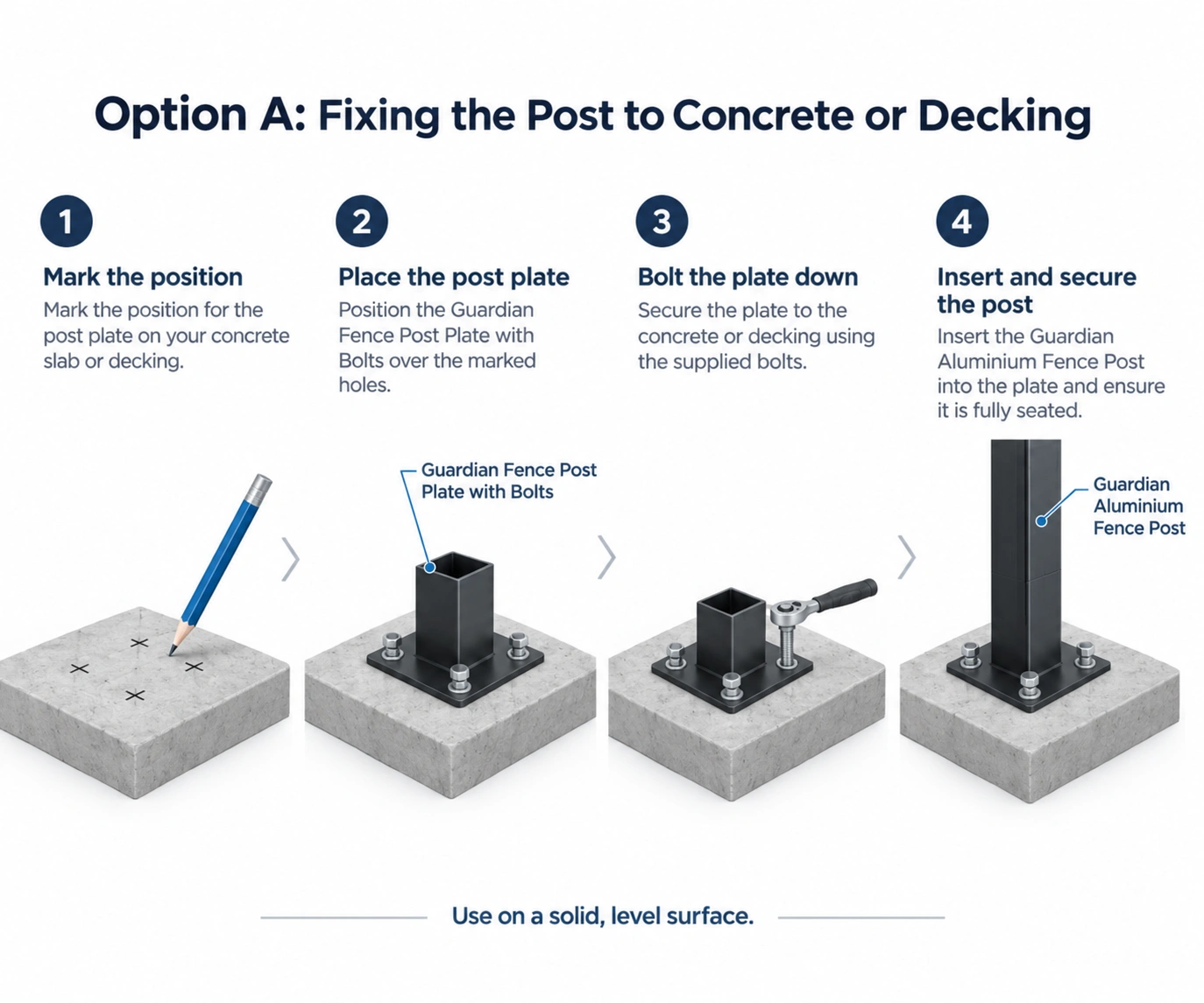
Fixing to a solid surface
If you are installing the fence onto a suitable concrete base or another structurally sound surface, the Guardian Fence Post Plate with Bolts can be used to secure the post.
The surface should be:
- level
- solid
- stable
- capable of supporting the fence safely
Make sure all fixings are suitable for the base material.
Fixing into the ground
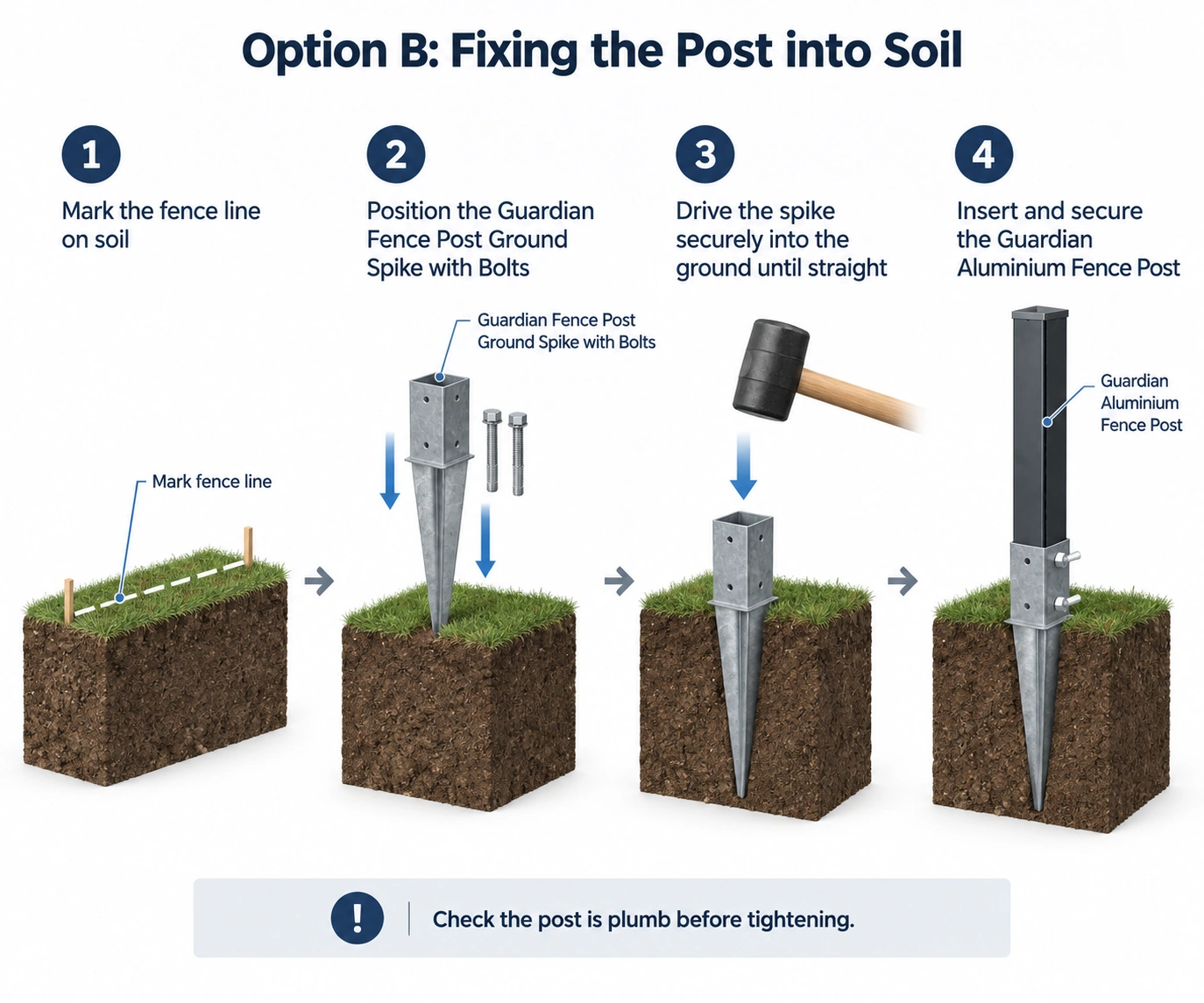
Where a ground fixing is more appropriate, the Guardian Fence Post Ground Spike with Bolts can provide an alternative option.
Whichever fixing method you choose, the posts must be positioned accurately and kept perfectly upright.
Step 3: Install the first aluminium post
Fit the first Guardian Aluminium Fence Post for Composite Fencing into position.
Use a spirit level to make sure the post is completely plumb in both directions.
This first post is important because every section that follows will be aligned from it.
Take your time at this stage and check the positioning carefully before tightening the fixings fully.
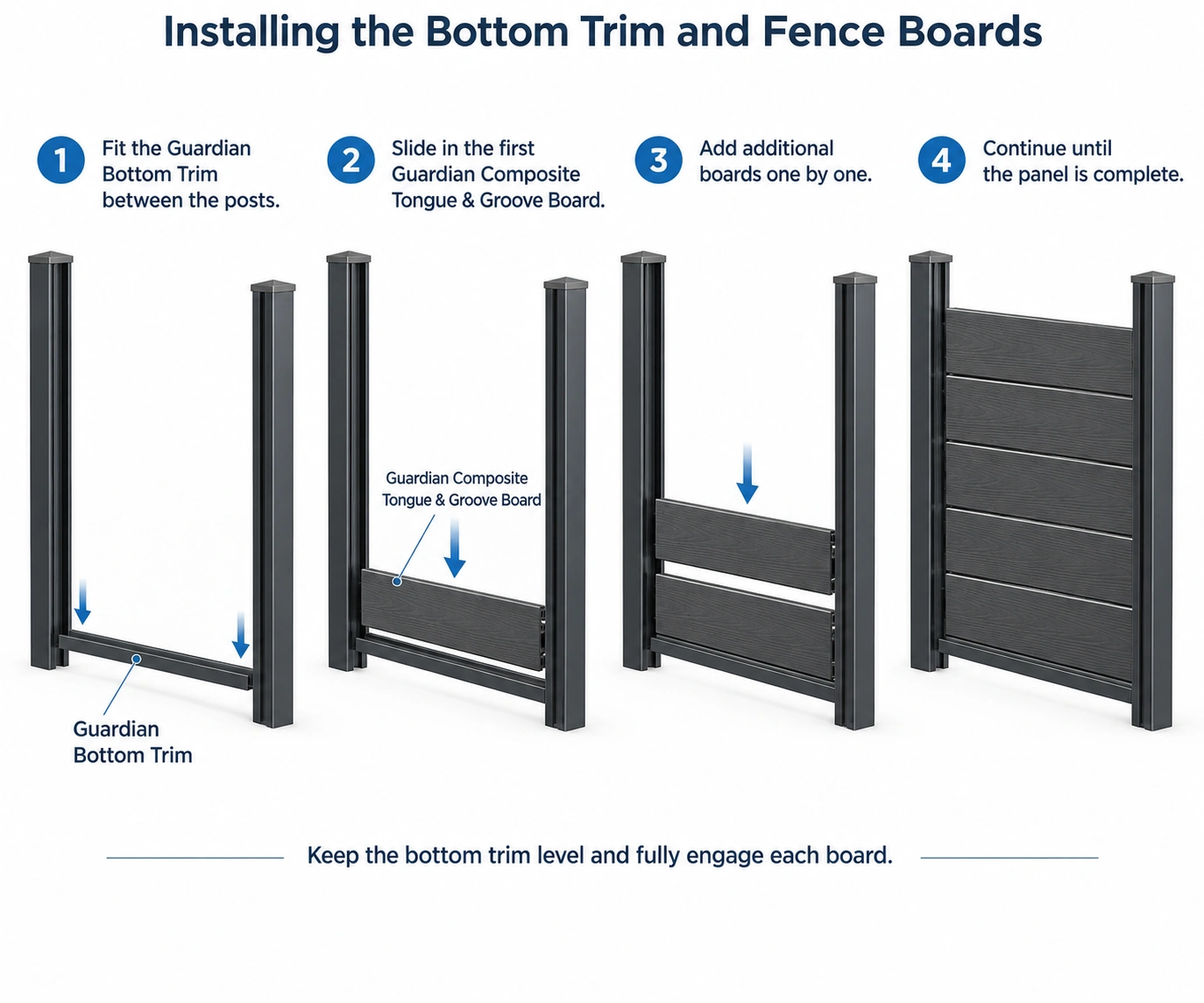
Step 4: Fit the bottom trim
Once the first post is secure, install the bottom section from the Guardian Top/Bottom Fence Trim Pack.
This creates a clean base for the fence panel and helps give the finished installation a neat, professional appearance.
Make sure the bottom trim is level before adding the boards.
Step 5: Install the composite fence boards
The Guardian Composite Tongue and Groove Fence Boards – 2-Pack are designed to interlock.
Insert the first board into the post and make sure it sits correctly on the bottom trim.
Continue adding boards one at a time.
As you work, check that:
- each board is seated correctly
- the tongue-and-groove joints are fully engaged
- the panel remains level
- both ends sit correctly within the posts
It is worth checking the level every few boards rather than waiting until the panel is complete.
Step 6: Choose the facing side
The Guardian Composite Tongue and Groove Fence Boards – 2-Pack have a two-sided finish.
One side has a more grooved appearance, while the other has a flatter brushed finish.
Before installation, decide which finish you want facing outwards.
Try to keep the orientation consistent across all fence sections for the best overall appearance.
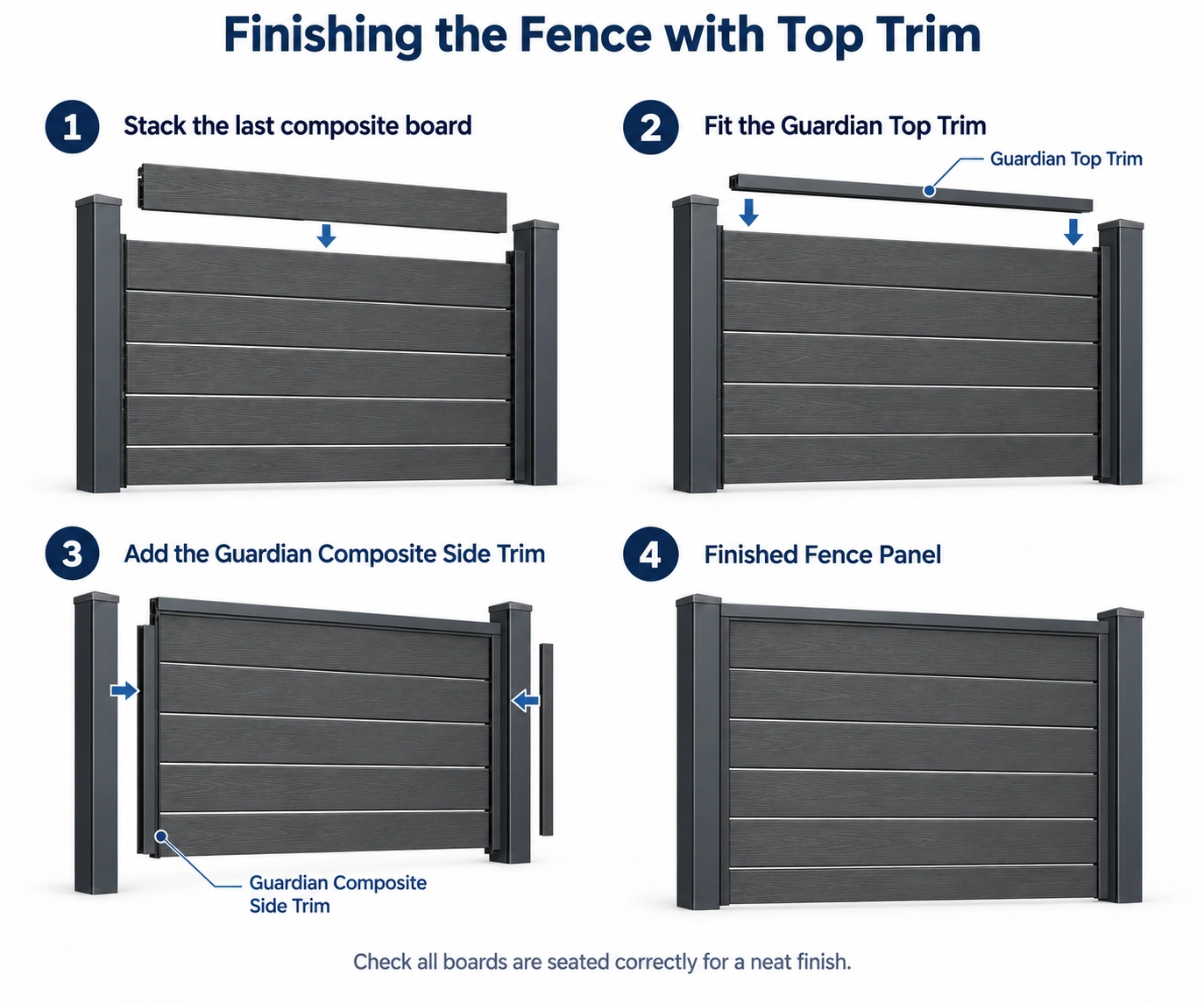
Step 7: Fit the top trim
Once the final board is in place, fit the top section from the Guardian Top/Bottom Fence Trim Pack.
This finishes the upper edge of the fence panel and helps create a clean, complete look.
The top trim is an important finishing detail and should sit evenly across the panel.
Step 8: Install the next post
Once the first panel is complete, install the next Guardian Aluminium Fence Post for Composite Fencing.
Check the spacing carefully before securing it.
The process can then be repeated:
post → bottom trim → boards → top trim → next post
Continue in the same way until the full boundary is complete.
Step 9: Add finishing trims
Where required, use the Guardian Fence Composite Trim 1.8m Pack (2) to finish exposed edges and give the installation a cleaner overall appearance.
These trims are particularly useful where you want a more polished finish around the ends of the fencing system.
Can composite fencing be installed between existing concrete posts?
In some situations, yes.
If your existing concrete posts are still in good condition, composite fencing can sometimes be fitted between them using suitable adapters.
This can be a useful option where old timber panels are being replaced but the concrete posts are still sound.
Before going ahead, check that the existing posts are straight, secure and correctly spaced.
Why choose composite fencing?
Composite fencing has several advantages over traditional timber.
- · Lower maintenance
- Composite boards do not normally require regular painting, staining or oiling.
- Routine cleaning is usually enough to keep them looking tidy.
- · Resistant to rot
- Unlike timber, composite material is not prone to rot in the same way, making it a practical option for damp Irish conditions.
- · Modern appearance
- The clean lines of the Guardian Composite Tongue and Groove Fence Boards – 2-Pack make them well suited to contemporary gardens.
- · Consistent finish
- Because the boards are manufactured, they offer a more uniform appearance than many traditional timber products.
- · Durable post system
- The Guardian Aluminium Fence Post for Composite Fencing provides a strong, low-maintenance support system and is designed specifically for use with composite fencing.
How much composite fencing do you need?
Before ordering, work out:
- the total fence length
- the number of sections
- the required fence height
- the number of boards per section
- the number of posts
- the number of top and bottom trims
- the correct fixing method for each post
It is sensible to allow a little extra for cutting, adjustments and site conditions.
Example: Planning a 7.2 metre fence
For a straight boundary of approximately 7.2 metres, you may need roughly four sections based on boards around 1.79 metres long.
You would then calculate the number of Guardian Composite Tongue and Groove Fence Boards – 2-Pack required based on the chosen height.
You would also need enough Guardian Aluminium Fence Post for Composite Fencing units to support each section, plus the relevant Guardian Top/Bottom Fence Trim Pack components and either Guardian Fence Post Plate with Bolts or Guardian Fence Post Ground Spike with Bolts depending on the installation surface.
Tips for a better finish
A few simple checks can make a big difference to the finished result:
- measure twice before fixing posts
- check every post with a spirit level
- keep the bottom trim level
- make sure each tongue-and-groove board is fully seated
- keep the board finish facing the same direction
- check spacing before tightening post fixings
- do not rush the first section, as it sets the alignment for the rest of the fence
Before you get started
Installing composite fencing can be a straightforward DIY project for confident homeowners, provided the fence line is measured carefully, the posts are positioned accurately, and each stage is checked as you go.
Taking a little extra time with alignment and fixing will make a big difference to the finished result.
Make sure each post is plumb, each board is seated correctly, and all fixings are secure before moving on to the next section.
If you’re unsure about any part of the installation, reach out to our expert team as we’re always happy to help with product advice and guidance.


- Guardian Composite Tongue and Groove Fence Boards – 2-Pack€31.50 Regular Price €31.50
- Guardian Aluminium Fence Post for Composite FencingFrom €60.75 Regular Price €60.75
- Guardian Fence Composite Trim 1.8m Pack (2)€29.43 Regular Price €29.43
- Guardian Top/Bottom Fence Trim PackFrom €24.07 Regular Price €24.07