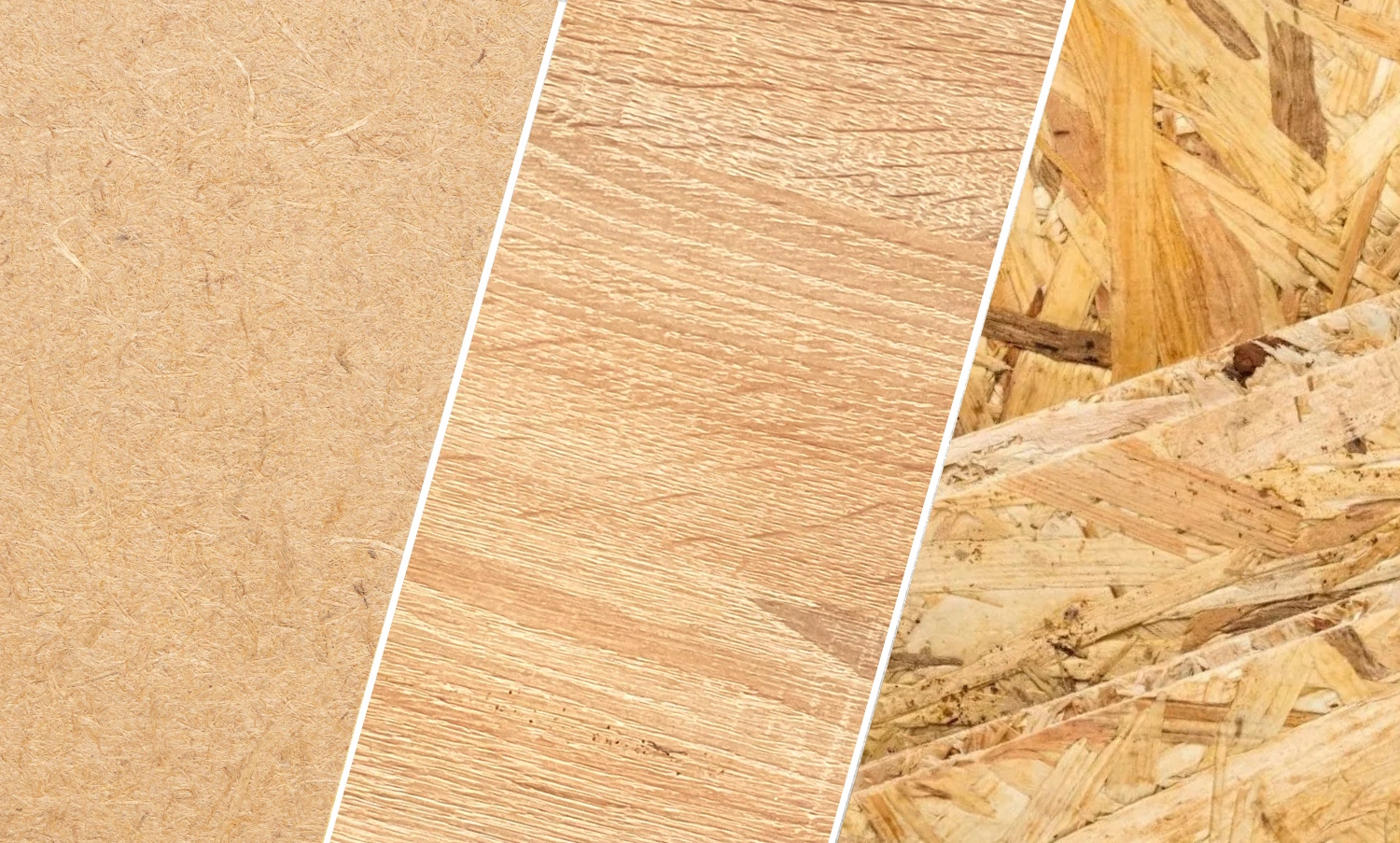
MDF vs Plywood vs OSB: When to use each
When planning a DIY project or construction job, choosing the right sheet material can make all the difference.
Three of the most commonly used engineered wood products are MDF, plywood and OSB.
At first glance, they may seem similar, but each board has unique characteristics that make it better suited to certain applications.
Selecting the wrong material can lead to unnecessary costs, poor durability, moisture damage or disappointing results.
Understanding the strengths and limitations of each board will help you choose the best option for your project, whether you're building furniture, laying flooring or carrying out structural work.
What is MDF?
Medium Density Fibreboard (MDF) is manufactured by compressing fine wood fibres with resin and wax under high pressure and heat.
The result is a dense, smooth and highly uniform board.
Advantages of MDF
- Exceptionally smooth surface for painting
- No knots or grain patterns
- Easy to cut and machine
- Produces clean edges and detailed profiles
- Consistent density throughout the board
- Excellent for decorative and interior projects
Disadvantages of MDF
- Heavier than plywood and OSB
- Can swell if exposed to moisture
- Lower load-bearing capacity
- Not suitable for structural applications
- Generates fine dust when cut
When should you use MDF?
MDF is often the go-to choice when achieving a smooth, attractive finish is the main priority.
Thanks to its consistent density and lack of natural grain, it is particularly well suited to interior projects where appearance and ease of finishing are important.
It is widely used for interior furniture, wardrobes, cabinets and shelving units, as well as decorative applications such as skirting boards, architraves and wall panelling.
MDF is also a popular choice for painted furniture and bespoke built-in storage, as its smooth surface takes paint exceptionally well, helping to create a professional-looking finish.
For areas that may experience occasional moisture, such as utility rooms, cloakrooms or bathrooms, Moisture Resistant MDF offers additional protection against damp conditions while retaining the smooth, easy-to-finish characteristics that make MDF such a versatile material.


What is Plywood?
Plywood is manufactured by bonding together multiple thin layers of timber veneer.
Each layer is positioned with its grain running in different directions, creating a board with excellent strength and stability.
Because of its layered construction, plywood offers impressive structural performance while remaining relatively lightweight.
Advantages of Plywood
- High strength and durability
- Good load-bearing capability
- Resistant to cracking and splitting
- Better moisture resistance than MDF
- Suitable for structural and decorative projects
- Holds screws and fixings extremely well
Disadvantages of Plywood
- Usually more expensive than MDF and OSB
- Surface may require finishing for decorative projects
- Lower-quality grades can contain voids
- Visible grain may not suit every design
When should you use plywood?
Plywood is one of the most versatile sheet materials available, valued for its combination of strength, stability and durability. Its layered construction makes it suitable for both structural and decorative applications, allowing it to perform well across a wide range of projects.
It is commonly used in furniture manufacturing, flooring substrates, shelving and joinery work, as well as for van linings, workbenches, roof and wall sheathing, and interior fit-outs.
Thanks to its excellent load-bearing properties and ability to hold fixings securely, plywood is often the material of choice when both appearance and performance are equally important.
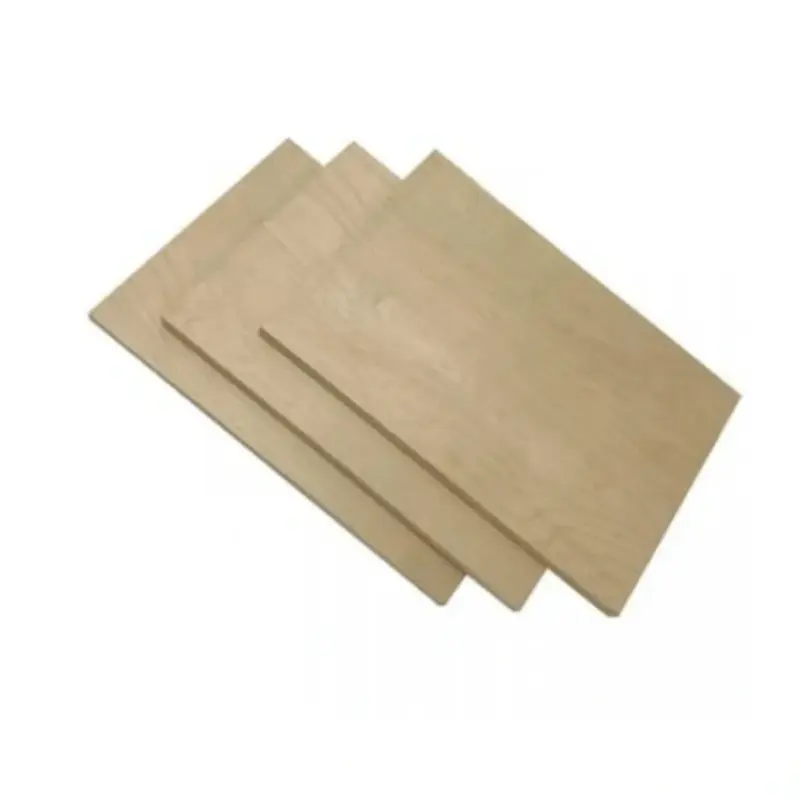
For general building and carpentry projects, Hardwood Faced Plywood and Enviro Grade Plywood 8ft x 4ft x 18mm offer an excellent balance of strength and versatility, making them suitable for everything from structural applications to everyday joinery tasks.
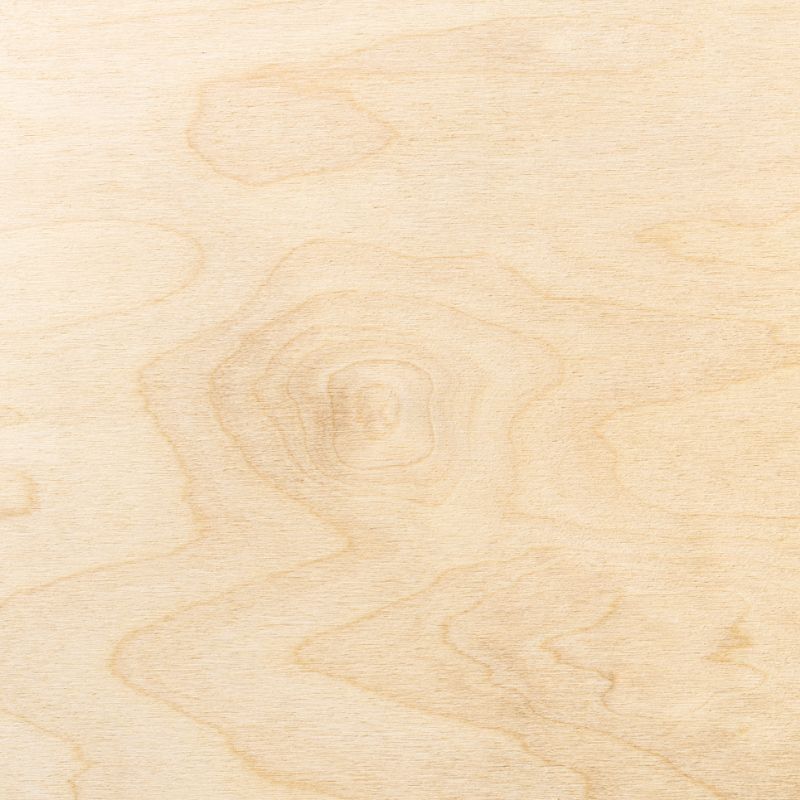
Where a more refined finish is required, Birch Plywood is particularly popular for furniture making, cabinetry and bespoke joinery projects, thanks to its smooth surface, attractive appearance and exceptional durability.
What about wet areas?
Moisture exposure is often a major concern when selecting sheet materials.
For projects where boards may regularly encounter water, such as boat building, exterior structures or high-moisture environments, Marine Plywood Sheeting is specifically designed to withstand demanding conditions.


What is OSB?
OSB, or Oriented Strand Board, is manufactured from compressed layers of wood strands bonded together using resins and adhesives. The strands are arranged in different directions to create a strong and stable panel.
Although it has a more rugged appearance than MDF or plywood, OSB has become one of the most popular choices for structural applications.
Advantages of OSB
- High structural strength
- Cost-effective for large areas
- Good dimensional stability
- Strong load-bearing properties
- Efficient use of timber resources
- Suitable for floors, walls and roofing
Disadvantages of OSB
- Rough appearance
- Not ideal for fine furniture
- Edges can swell if exposed to prolonged moisture
- Less attractive for decorative applications
When should you use OSB?
OSB is particularly well suited to construction projects where strength, durability and cost-effectiveness take priority over appearance.
Designed to withstand demanding conditions, it offers excellent structural performance and is widely used across both domestic and commercial building projects.
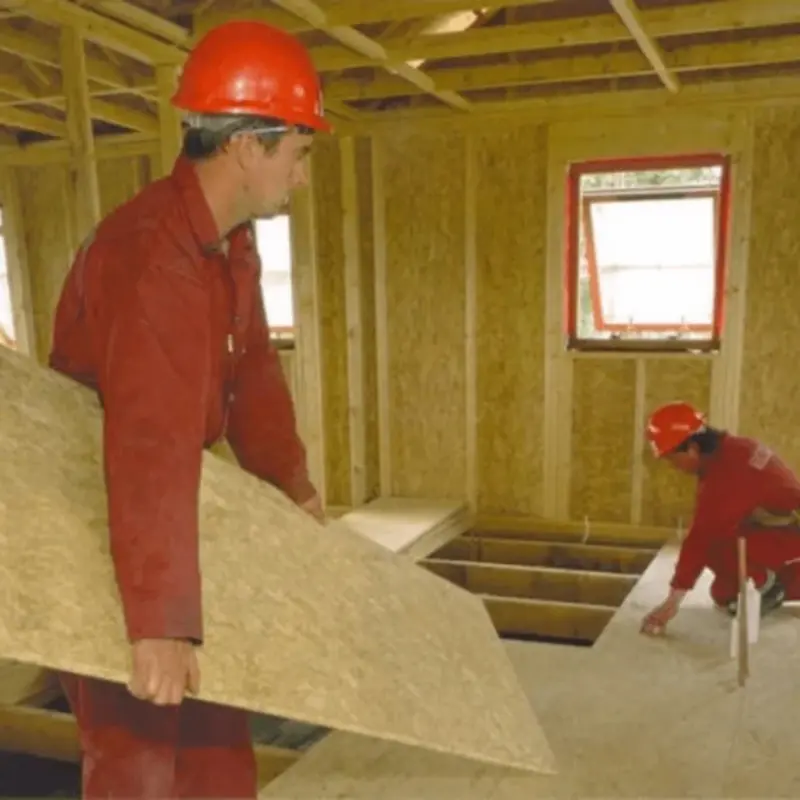
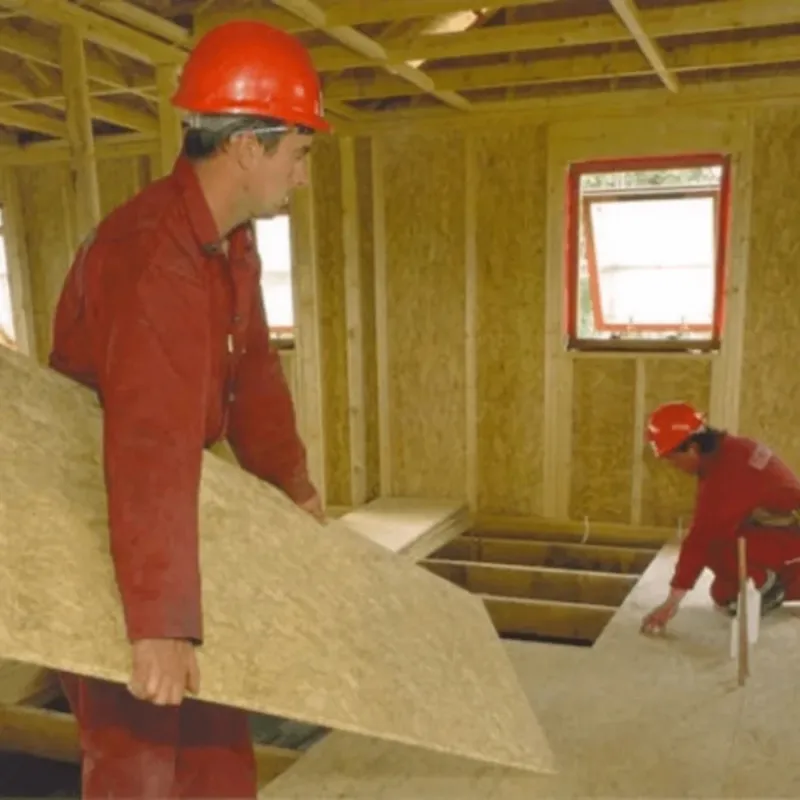
It is commonly used for floor decking, roof decking and wall sheathing, as well as for garden buildings, shed construction, site hoarding, temporary structures and workshop projects.
Its strength and dimensional stability make it a reliable choice for applications where a robust, hard-wearing board is required.
For flooring and general structural applications, Kronospan OSB3 Boards provide excellent strength and durability, making them a popular choice for builders and DIY enthusiasts alike.
Where an interlocking flooring system is needed, Kronospan OSB Board 18mm Tongue & Groove offers added stability and straightforward installation.
For smaller projects or lightweight applications, 11mm OSB Board delivers dependable performance while being easier to transport and handle on site.


MDF vs Plywood vs OSB: Side-by-side comparison
|
Feature |
MDF |
Plywood |
OSB |
|
Smooth Finish |
Excellent |
Good |
Fair |
|
Strength |
Moderate |
Excellent |
Excellent |
|
Moisture Resistance |
Low to Moderate |
Good |
Good |
|
Structural Use |
No |
Yes |
Yes |
|
Screw Holding |
Fair |
Excellent |
Good |
|
Weight |
Heavy |
Moderate |
Moderate |
|
Cost |
Moderate |
Higher |
Usually lower |
|
Decorative Projects |
Excellent |
Good |
Limited |
Which board should you choose?
Choose MDF if your project needs a perfectly smooth painted finish and is intended for indoor use.
Choose Plywood if you require strength, durability and versatility for furniture, joinery or structural projects.
Choose OSB if you need a robust, cost-effective board for flooring, roofing, wall construction or other structural applications.
Frequently asked questions:
Which board is best for furniture?
For painted furniture, MDF is often the preferred option.
For natural timber finishes and stronger furniture construction, plywood is usually the better choice.
Can plywood be painted?
Yes, plywood can be painted, stained or varnished.
Many people also leave the natural timber grain exposed to create a modern and attractive finish.
Is MDF good for kitchen cabinets?
Yes, MDF is widely used for painted kitchen doors and cabinetry because it offers a smooth, blemish-free finish that is difficult to achieve with many other sheet materials.
Which board is best for flooring?
OSB and plywood are both excellent flooring materials.
Tongue and groove OSB boards are particularly popular for subfloors due to their strength and ease of installation.
Can MDF be used outside?
Standard MDF should only be used indoors.
Even moisture-resistant grades are designed for internal use and should not be exposed directly to the weather.
Is OSB waterproof?
OSB3 boards are designed to perform in humid conditions and can tolerate some moisture exposure during construction.
However, like most engineered timber products, they should not remain exposed to standing water or the elements indefinitely.
Which board is the most cost-effective?
The best value depends entirely on the project.
Using the correct board from the beginning can improve durability, simplify installation and help avoid costly repairs later on.
Choosing the right board for your project
There is no one-size-fits-all solution when it comes to sheet materials. MDF, plywood and OSB each offer their own unique benefits, and understanding where each one performs best will help you achieve a better, longer-lasting result.
Whether you're building bespoke furniture, renovating a room, laying new flooring or taking on a larger construction project, selecting the right board from the outset can make the job easier and improve both the appearance and durability of the finished project.
If you're unsure which material is best suited to your needs, our expert team is always on hand to help.